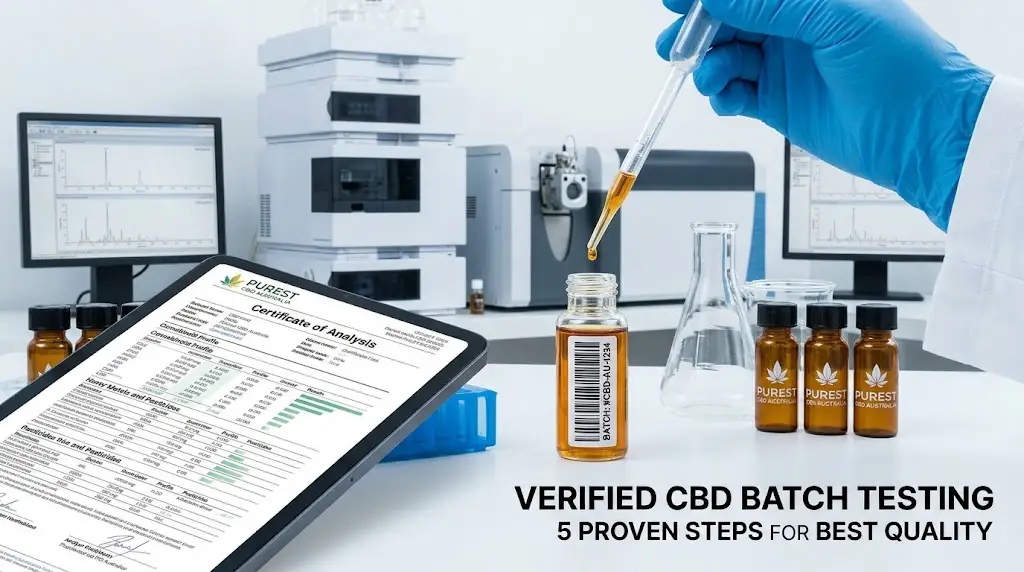
Ensuring product safety and consistency in the Australian hemp and cannabinoid industry relies on stringent verification methods. CBD Batch Testing represents the gold standard for validating product purity, potency, and freedom from harmful contaminants. As interest in hemp-derived cannabinoids continues to grow across Australia, understanding how individual batches are evaluated provides essential clarity for consumers seeking clean, high-quality formulations.
Every production batch of hemp extract must undergo rigorous analytical evaluation before reaching consumers. Because raw plant material naturally varies depending on cultivation conditions, soil quality, and climate, individual batch assessment guarantees that every final product adheres to precise compositional standards.
1. Why CBD Batch Testing Is Critical for Purity
The primary purpose of independent testing is to verify that a product contains exactly what is declared on its label. Hemp is a known bioaccumulator, meaning it readily absorbs substances from the surrounding soil and water during growth. While this property makes hemp an excellent plant for soil remediation, it also highlights the vital need for comprehensive laboratory analysis prior to formulation.
Through systematic evaluation, accredited third-party laboratories verify that extracted cannabinoids meet required specifications while remaining free from undesirable environmental residues. For Australian consumers reviewing product documentation, consistent batch testing provides verifiable transparency regarding raw material integrity.
2. Key Components of Rigorous CBD Batch Testing
A comprehensive laboratory analysis evaluates several distinct chemical and biological markers. The five core components of complete batch analysis include:
- Cannabinoid Profiling: Quantitative measurement using High-Performance Liquid Chromatography (HPLC) to confirm exact concentration levels of cannabidiol (CBD), cannabigerol (CBG), cannabinol (CBN), and other secondary phytocannabinoids.
- Heavy Metal Screening: Inductively Coupled Plasma Mass Spectrometry (ICP-MS) testing to ensure toxic heavy metals such as lead, cadmium, arsenic, and mercury remain below detectable thresholds.
- Pesticide Residue Analysis: Comprehensive screening across dozens of synthetic chemical pesticides, herbicides, and fungicides commonly utilized in commercial agriculture.
- Residual Solvent Analysis: Gas Chromatography (GC) screening to verify that extraction solvents (such as supercritical CO2 or organic ethanol) have been thoroughly removed during refining.
- Microbial Contaminant Testing: Biological assays screening for yeast, mould, Salmonella, E. coli, and harmful bacterial pathogens.
By assessing each of these specific criteria, manufacturers can ensure that their products align with regulatory guidance published by Australia’s Therapeutic Goods Administration (TGA) concerning quality benchmarks for botanical preparations.
3. Interpreting Certificates of Analysis (COAs)
A Certificate of Analysis (COA) serves as the official laboratory report generated from each testing round. Reading a COA requires understanding a few key metrics:
First, check the Batch Number listed at the top of the report to confirm it matches the batch code stamped on the product packaging. Next, verify the Test Date to ensure the analysis reflects recent production rather than historical data.
Finally, examine the quantitative results against reported units of measurement (typically expressed as milligrams per millilitre, mg/mL, or percentage weight by volume). Accurate batch records should clearly state the limit of detection (LOD) and limit of quantitation (LOQ) for each analyte, confirming that testing methodologies met industry precision standards.
4. How Storage and Handling Affect Batch Stability
Even after successful laboratory testing, environmental exposure can impact product stability over time. Phytocannabinoids and terpenes are naturally sensitive to light, heat, and oxygen exposure. Proper storage protocols are essential to maintaining chemical stability throughout a product’s shelf life.
To preserve product integrity after batch verification, keep liquid extracts stored in dark glass containers away from direct sunlight and heat sources. Maintaining stable storage conditions ensures that cannabinoid concentrations remain consistent from the first dose to the last.
5. Best Practices for Evaluating Australian CBD Quality
When reviewing hemp products available in Australia, following a structured evaluation process empowers consumers to make informed choices based on scientific evidence rather than promotional marketing:
- Request Full-Panel COAs: Always look for full-panel testing rather than simple cannabinoid potency tests. Full-panel reports confirm safety across metals, solvents, and microbes.
- Verify Independent Accreditation: Ensure testing is conducted by ISO/IEC 17025 accredited laboratories operating independently of the product manufacturer.
- Cross-Check Label Information: Compare batch codes on the physical bottle directly with laboratory documentation published on educational resources like the Purest CBD Australia blog.
Comprehensive batch documentation serves as the ultimate benchmark of botanical quality, bridging laboratory science with consumer trust.
Frequently Asked Questions About CBD Batch Testing
Q: What does CBD Batch Testing mean?
A: It is the scientific laboratory analysis of a specific production lot of hemp extract to confirm cannabinoid concentration and verify the absence of harmful contaminants such as heavy metals, pesticides, and residual solvents.
Q: How often should hemp products undergo batch testing?
A: Every unique production batch should be independently tested prior to packaging to account for natural botanical variations across harvest seasons and extraction cycles.
Q: Where can consumers view batch testing results?
A: Reputable manufacturers publish Certificates of Analysis (COAs) on their official websites or provide batch-specific QR codes directly on product packaging for easy access.
Q: What is the difference between potency testing and full-panel testing?
A: Potency testing only measures the percentages of cannabinoids present, whereas full-panel testing evaluates both cannabinoid potency and safety markers, including pesticides, heavy metals, residual solvents, and microbial contaminants.
In conclusion, verifying CBD Batch Testing reports is an essential habit for anyone seeking high-standard, transparent hemp formulations in Australia. By understanding laboratory findings and insisting on independent verification, consumers can confidently choose verified products backed by rigorous quality controls.
Recent Comments