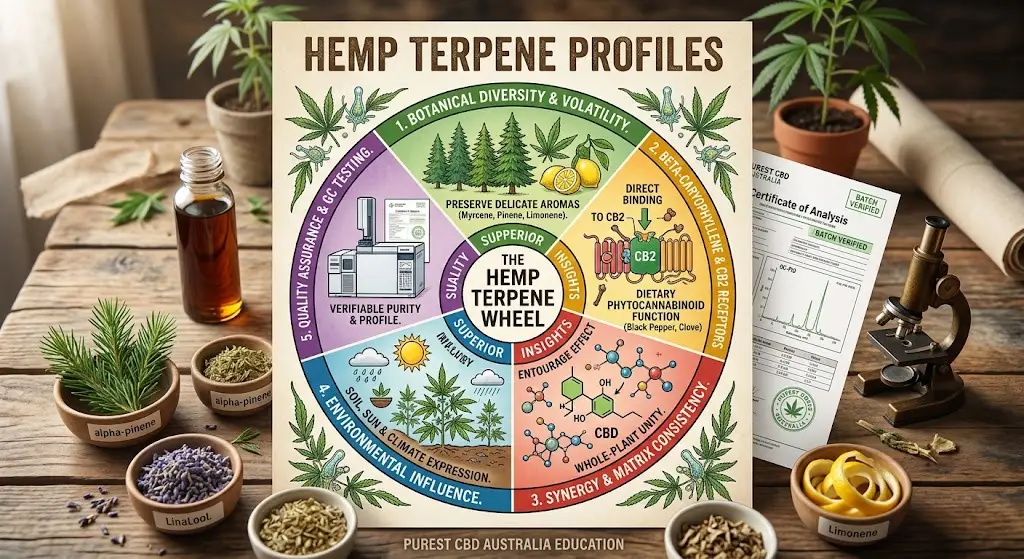
Understanding Hemp Terpene Profiles provides valuable insights into the complex botanical structure of industrial hemp plants. These naturally occurring aromatic compounds work alongside cannabinoids to define the unique characteristics of broad-spectrum plant extracts. Across Australia, botanical researchers and consumers alike are increasingly interested in how secondary metabolites influence extract quality, aroma, and overall stability. As regulatory standards overseen by authorities such as the Therapeutic Goods Administration (TGA) emphasise consistency and quality control in non-therapeutic botanical products, evaluating the natural chemical matrix of hemp has never been more relevant.
This comprehensive educational guide explores the science behind terpenes, how extraction methodologies preserve these delicate compounds, and why analytical testing remains critical for verifiable purity. To learn more about broad-spectrum product standards, explore the Purest CBD Australia blog for ongoing educational resources.
Understanding Hemp Terpene Profiles and Botanical Chemistry
Terpenes are organic hydrocarbons synthesised within the trichomes of the Cannabis sativa plant. These microscopic glandular structures are responsible for producing both cannabinoids and essential oils. In nature, terpenes serve defensive mechanisms, deterring herbivores and pests while attracting beneficial pollinators through distinct aromatic signals.
When analysing Hemp Terpene Profiles, laboratory testing typically identifies dozens of individual terpene compounds. Each terpene features a distinct molecular arrangement, broadly classified into monoterpenes (such as myrcene, limonene, and pinene) and sesquiterpenes (such as beta-caryophyllene and humulene). Monoterpenes are lighter, highly volatile molecules that contribute sharp top notes, whereas sesquiterpenes possess heavier molecular weights and provide earthy, grounding base notes.
The preservation of these aromatic molecules during processing reflects the overall care taken during cultivation, harvesting, and supercritical carbon dioxide (CO2) extraction. High-temperature processing can degrade volatile terpenes, making low-temperature extraction essential for retaining natural phytochemical diversity.
5 Key Insights into Hemp Terpene Profiles in Broad-Spectrum Extracts
To better evaluate botanical quality, consider these five fundamental aspects of terpene science in broad-spectrum hemp formulations:
1. Botanical Diversity and Monoterpene Volatility
Monoterpenes constitute the majority of volatile emissions in fresh hemp flowers. Compounds such as alpha-pinene and beta-myrcene evaporate rapidly when exposed to heat or open air. Premium processing methods prioritise gentle cold-press or low-temperature CO2 extraction to maintain these delicate aromatic structures in final broad-spectrum oils.
2. The Role of Beta-Caryophyllene as a Dietary Phytocannabinoid
Beta-caryophyllene holds a unique position among plant compounds because it functions as both a terpene and a selective CB2 receptor binding agent. This dual nature allows it to interact directly with the body’s endocannabinoid system without exhibiting any intoxicating properties, making it a pivotal subject of ongoing botanical research.
3. Synergy and Phytochemical Matrix Consistency
The concept of plant synergy suggests that broad-spectrum extracts derived from whole-plant matrices offer greater stability and natural harmony than isolated single compounds. Retaining balanced terpene ratios ensures that the natural integrity of the original plant material is reflected accurately in finished products.
4. Environmental Influence on Terpene Expression
Cultivation parameters—including soil nutrient balance, solar radiation, ambient temperature, and humidity—directly shape the ultimate terpene composition of industrial hemp crops. Rigorous batch testing ensures that seasonal variations are quantified and recorded accurately on Certificates of Analysis (COA).
5. Quality Assurance Through Gas Chromatography
Independent laboratory testing utilises Gas Chromatography with Flame Ionisation Detection (GC-FID) or Mass Spectrometry (GC-MS) to quantify individual terpene concentrations. Verified lab reports confirm the absence of synthetic solvents and validate that the extract maintains authentic natural profiles.
How Extraction Methods Impact Terpene Retention
The methodology used to process industrial hemp determines the final concentration of preserved aromatic compounds. Standard extraction procedures vary in their temperature and pressure settings:
- Supercritical CO2 Extraction: Utilises compressed carbon dioxide at precise temperatures to gently isolate cannabinoids and terpenes without solvent residue.
- Subcritical CO2 Extraction: Operates at lower temperatures and pressures, specifically preserving light, volatile monoterpenes that might otherwise degrade.
- Cold-Ethanol Extraction: Efficient for large-scale processing, though careful thermal management is required during solvent recovery to prevent thermal degradation of terpenes.
Selecting clean, non-toxic extraction protocols ensures that broad-spectrum extracts maintain their natural phytocompound profile without introduction of harsh chemical contaminants.
Frequently Asked Questions About Hemp Terpene Profiles
What are hemp terpenes?
Hemp terpenes are naturally occurring aromatic hydrocarbon compounds produced in the trichomes of industrial hemp plants. They give different hemp cultivars their distinct scent, flavour, and natural phytochemical characteristics.
Why are terpenes preserved in broad-spectrum CBD extracts?
Preserving terpenes maintains the full natural botanical profile of the industrial hemp plant. This ensures that broad-spectrum products deliver the natural synergy of cannabinoids and aromatic compounds working together.
How are terpene levels verified in finished products?
Terpene levels are verified using third-party laboratory testing, specifically Gas Chromatography (GC-MS or GC-FID). These tests generate a Certificate of Analysis detailing the exact percentage of each individual terpene present in the batch.
In summary, exploring Hemp Terpene Profiles provides essential knowledge regarding botanical purity, natural aroma, and phytochemical complexity. By understanding how environmental factors and clean extraction methods protect these volatile compounds, consumers can make informed decisions when reviewing broad-spectrum Australian hemp products.
Recent Comments