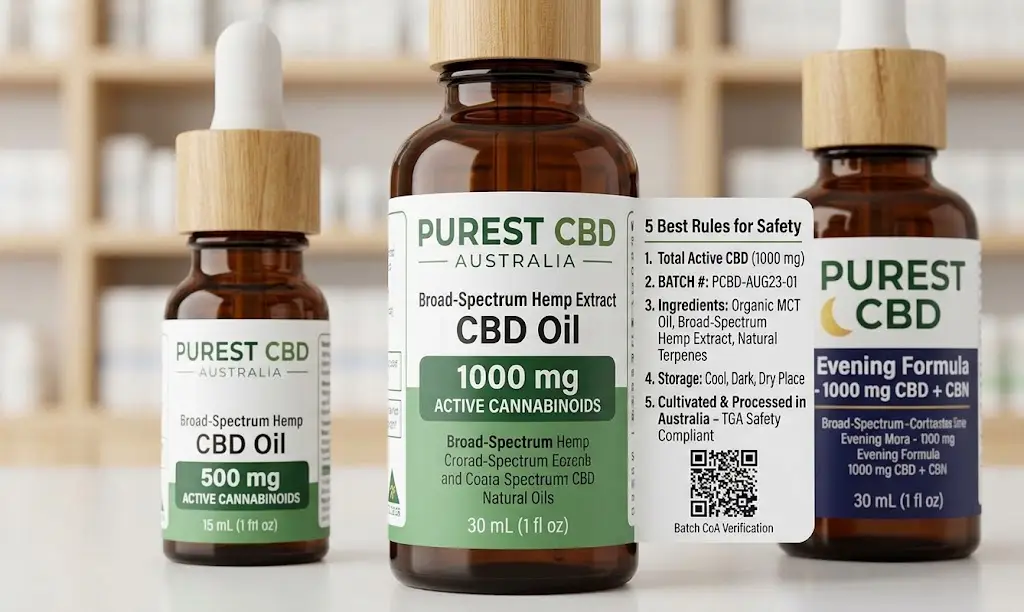
Navigating the hemp market requires understanding how to read CBD product labels correctly. As interest in hemp extracts grows across Australia, consumers and industry professionals alike look to transparent labelling to confirm product integrity and origin. Learning to identify batch details, cannabinoid profiles, and laboratory verification ensures complete clarity. In this comprehensive guide, we explore the essential components of accurate CBD product labels to help you interpret product information with confidence and precision.
Understanding packaging details is vital for evaluating hemp formulations. Clear labelling provides insights into the concentration of cannabinoids, the presence of carrier oils, and the independent analytical testing conducted on each production run.
Understanding CBD Product Labels and Cannabinoid Profiles
A primary function of CBD product labels is to state the concentration and classification of hemp compounds contained within the product. Broad-spectrum hemp extracts typically feature a variety of non-psychoactive cannabinoids, such as cannabidiol (CBD), cannabigerol (CBG), and cannabinol (CBN), alongside naturally occurring terpenes.
When reviewing a label, it is important to distinguish between total volume (expressed in millilitres or grams) and the active compound weight (expressed in milligrams). For example, a 30 mL bottle containing 1000 mg of active cannabinoids provides a different concentration than a 60 mL bottle with the same total cannabinoid mass. Accurate labelling clearly articulates both values so users can calculate exact strength per serving.
For more details on evaluating different formulations, explore our Product Guides section, which covers compound classifications and product selection standards.
5 Key Elements of Accurate CBD Product Labels
High-quality hemp products adhere to stringent quality control standards. Below are the five critical elements that every well-documented label should display:
1. Total Active Cannabinoid Content
The total milligram count of active broad-spectrum cannabinoids must be clearly printed on the primary display panel. This number represents the combined weight of cannabinoids present in the entire container, offering a reliable metric for product strength.
2. Batch or Lot Number
A unique batch or lot number allows complete traceability back to the specific manufacturing run. Batch tracking ensures that every bottle can be cross-referenced with its corresponding laboratory testing documentation.
3. Detailed Ingredient List
Transparent labelling discloses every ingredient in descending order of predominance. This includes the primary hemp extract, carrier oils (such as organic hempseed oil or MCT oil), and any natural flavouring components.
4. Recommended Storage Instructions
Hemp extracts are sensitive to light, heat, and air exposure. Labels should provide clear storage guidelines—such as keeping the container in a cool, dark location—to preserve compound stability and extend shelf life.
5. Manufacturing Origin and Compliance Statements
Legitimate products highlight where the hemp was cultivated and processed. Regulatory oversight in Australia, overseen by the Therapeutic Goods Administration (TGA), sets clear standards for botanical extracts, emphasizing safety and quality compliance across the industry.
Why Laboratory Verification Matters for Product Transparency
Beyond the physical packaging, reputable manufacturers provide direct access to independent third-party Certificate of Analysis (CoA) reports. A CoA validates that the claims printed on CBD product labels accurately reflect the physical contents of the batch.
Independent laboratories utilize high-performance liquid chromatography (HPLC) to analyze cannabinoid potency and confirm the absence of heavy metals, pesticides, residual solvents, and microbial contaminants. To learn more about how batch testing guarantees product purity, visit our dedicated Quality & Testing category.
Frequently Asked Questions About CBD Product Labels
What is the difference between full-spectrum and broad-spectrum labels?
Full-spectrum labels indicate the presence of trace amounts of THC alongside other hemp compounds. Broad-spectrum labels signify that THC has been selectively removed during processing while retaining non-psychoactive cannabinoids and terpenes.
How can I verify if a CBD product label is authentic?
Authentic labels include a batch number or QR code that links directly to a third-party Certificate of Analysis (CoA). Comparing the batch number on your bottle with the analytical test report confirms authenticity and compound verification.
Why is active cannabinoid weight listed in milligrams?
Active cannabinoid weight is listed in milligrams (mg) to provide an accurate measurement of total compound mass. Total liquid volume (mL) indicates liquid quantity, while active milligrams reflect the concentration of hemp extract contained within that volume.
In summary, reading CBD product labels with analytical rigor allows consumers to verify compound integrity, batch origin, and third-party laboratory testing standards across all broad-spectrum hemp formulations.
Recent Comments