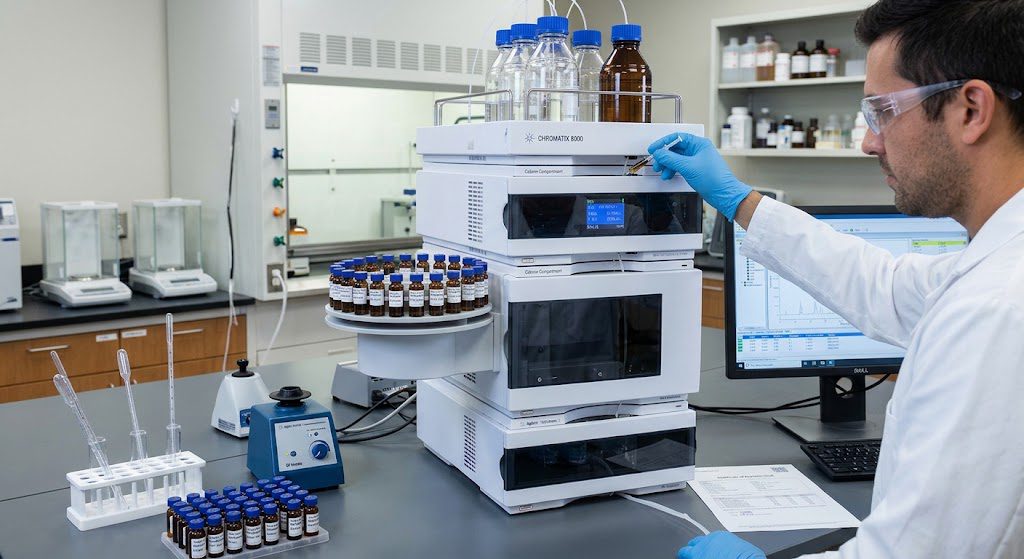
Navigating the landscape of cannabinoid extracts in Australia requires a keen eye for scientific accuracy and product standardisation. When evaluating the purity, safety, and potency of hemp-derived preparations, understanding analytical methodologies is essential for consumers, manufacturers, and practitioners alike. Among the sophisticated techniques utilised by accredited analytical laboratories, HPLC Testing stands out as the gold standard for verifying exact cannabinoid profiles and ensuring batch-to-batch consistency across commercial botanical products.
Ensuring transparency in the Australian wellness market relies heavily on rigorous laboratory validation. Regulatory oversight by bodies such as the Therapeutic Goods Administration (TGA) establishes clear boundaries for product safety and compliance. To explore further educational resources on cannabinoid science, botanical testing protocols, and industry practices, visit our Purest CBD Australia blog for comprehensive insights.
Understanding the Mechanics and Principles of HPLC Testing
High-Performance Liquid Chromatography (HPLC) is an advanced analytical chemistry technique used extensively to separate, identify, and quantify each individual chemical component in a complex botanical mixture. In the context of hemp and cannabis extracts, HPLC Testing allows laboratory technicians to pump a pressurised liquid solvent—known as the mobile phase—carrying the dissolved cannabinoid sample through a specialised analytical column filled with a finely packed solid adsorbent material (the stationary phase).
As the sample solution migrates through the column under high pressure, different chemical compounds interact at varying rates with both the stationary and mobile phases. Compounds with a stronger affinity for the stationary phase move slower, while those favouring the mobile phase elute faster. This differential interaction enables precise separation of individual phytocannabinoids, including cannabidiol (CBD), cannabinol (CBN), cannabigerol (CBG), and delta-9-tetrahydrocannabinol (THC). Crucially, this separation occurs at ambient or controlled room temperatures, avoiding the thermal stress that can alter fragile molecular structures.
Why HPLC Testing Outperforms Older Analytical Methods
Historically, older analytical methods such as gas chromatography (GC) were frequently deployed for botanical testing. However, gas chromatography requires high thermal energy to volatilise liquid samples into a gaseous state before analysis. This intense heat can inadvertently trigger decarboxylation, converting non-intoxicating acidic precursors like cannabidiolic acid (CBDA) into active CBD, thereby skewing potency calculations and distorting the true natural profile of the raw plant extract.
By contrast, HPLC Testing operates entirely in the liquid phase at room temperature. This non-destructive approach preserves the native chemical makeup of the extract, delivering an authentic, highly accurate snapshot of the formulation’s true composition. Furthermore, modern HPLC systems are typically coupled with advanced Ultraviolet-Visible (UV-Vis) or Diode-Array Detectors (DAD), which measure light absorption characteristics to identify and quantify each compound with remarkable precision down to parts per million.
The Critical Role of Retention Times and Chromatograms
When analytical laboratories complete an assay, the resulting data is displayed visually as a chromatogram—a graph featuring a series of distinct peaks rising along a baseline. Each peak corresponds to a specific chemical substance exiting the column, with the horizontal axis representing retention time (the exact duration required for a compound to travel through the system).
Laboratory technicians calibrate these instruments using certified reference standards of pure cannabinoids. By comparing the retention times and peak areas of the unknown sample against known reference standards, analysts can calculate exact concentrations with exceptional statistical confidence. This granular data forms the backbone of reliable Certificates of Analysis (CoAs), giving Australian consumers objective proof of product quality and safety.
Ensuring Compliance, Safety, and Consumer Confidence
In a burgeoning botanical market, quality assurance cannot be left to guesswork. Independent third-party verification protects consumers from substandard formulations, mislabelled potency claims, and unexpected contaminants. Analytical testing verifies that hemp-derived oils comply with local legal limits—such as strict thresholds for restricted cannabinoids—while confirming the concentration of active beneficial compounds.
Manufacturers who invest in routine chromatographic screening demonstrate an unwavering commitment to transparency and ethical standards. For Australian buyers, inspecting a detailed CoA backed by professional laboratory assays ensures informed decision-making and peace of mind when selecting daily wellness supplements.
Frequently Asked Questions About HPLC Testing
What is HPLC testing and why is it essential for hemp extracts?
It is an advanced liquid-phase analytical technique used to separate, identify, and quantify individual cannabinoids in a botanical extract. It is vital because it provides precise potency measurements without destroying heat-sensitive compounds.
How does high-performance liquid chromatography differ from gas chromatography?
While gas chromatography relies on high temperatures to vaporise samples—which can alter delicate molecules like acidic cannabinoids—HPLC operates at room temperature using liquid solvents, ensuring the native chemical profile remains intact.
Can this analytical method detect trace cannabinoids accurately?
Yes, modern HPLC systems equipped with advanced ultraviolet detectors offer exceptional sensitivity, allowing laboratories to accurately quantify minor cannabinoids and trace constituents down to minute parts-per-million concentrations.
Ultimately, embracing rigorous scientific validation protocols safeguards product integrity across the entire supply chain. As botanical standards continue to mature throughout Australia, relying on advanced analytical frameworks like HPLC Testing remains indispensable for achieving uncompromised quality and consumer trust.
Recent Comments