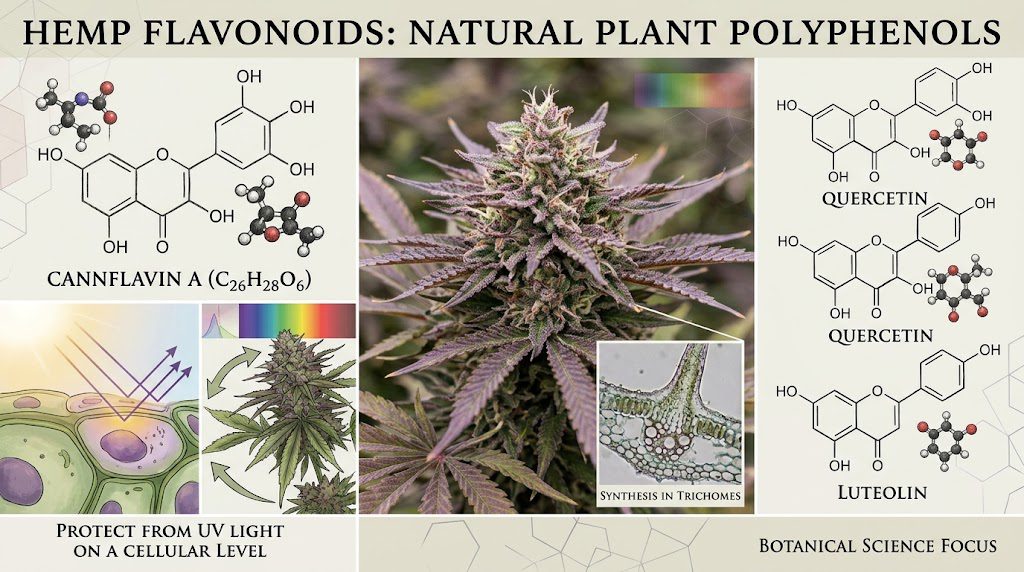
When exploring the botanical complexity of the Cannabis sativa plant, attention often gravitates directly toward prominent cannabinoids like CBD and aromatic terpenes. However, hemp flavonoids represent a fascinating yet frequently overlooked class of bioactive plant compounds. These naturally occurring polyphenols contribute significantly to the plant’s vibrant pigmentation, UV protection, and overall biochemical profile. Understanding what hemp flavonoids are and how they function within various botanical formulations provides valuable insight into modern hemp science and quality standards.
1. What Are Hemp Flavonoids and Where Do They Come From?
Flavonoids are a diverse group of phytonutrients widely distributed throughout the plant kingdom. In industrial hemp, researchers have identified over twenty distinct flavonoid structures. Beyond general plant polyphenols, cannabis plants synthesise unique prenylated flavonoids known as cannflavins—specifically cannflavin A, B, and C. These specialised compounds are concentrated primarily in the aerial parts of the plant and work in tandem with other botanical constituents.
2. Biological Functions of Hemp Flavonoids in Nature
In their natural environment, hemp flavonoids serve critical ecological functions. They act as natural sunscreen, absorbing harmful ultraviolet (UV) radiation to protect delicate cellular structures. Furthermore, their bitter or astringent taste discourages herbivores, while their pigment attributes assist in attracting beneficial pollinators. For a deeper understanding of how these botanical elements are studied, you can explore the educational resources available on the Purest CBD Australia Blog.
3. Synergy and the Entourage Effect
While cannabinoids are heavily studied for their receptor interactions, hemp flavonoids contribute significantly to the broader matrix of the plant. Botanical experts frequently discuss the entourage effect—a biochemical phenomenon where various plant compounds work synergistically. The presence of natural flavonoids alongside terpenes and minor cannabinoids helps maintain the holistic integrity of broad spectrum and full spectrum botanical profiles.
4. Analytical Testing and Quality Assurance
Ensuring product consistency requires rigorous laboratory testing. Advanced analytical techniques such as high-performance liquid chromatography (HPLC) are utilised by accredited laboratories to quantify cannabinoid and flavonoid profiles. Transparent quality testing guarantees that consumers receive accurate information regarding product composition. Regulatory oversight and guidelines established by authorities such as the Therapeutic Goods Administration provide important context for standard compliance and consumer safety in Australia.
5. Preservation During Supercritical CO2 Extraction
Extracting delicate botanical compounds without thermal degradation is a major engineering feat in modern processing. Supercritical CO2 extraction allows technicians to precisely control temperature and pressure parameters. This gentle extraction method safeguards heat-sensitive hemp flavonoids and terpenes, ensuring the final extract retains the authentic biochemical signature of the original plant material.
6. Key Structural Differences from Terpenes
It is common for newcomers to confuse flavonoids with terpenes, but their chemical structures differ fundamentally. Terpenes are volatile isoprenoid hydrocarbons responsible for aromatic scents such as pine, citrus, or earthiness. Conversely, hemp flavonoids are non-volatile phenolic compounds characterised by benzo-gamma-pyrone structures. Both classes of molecules complement each other structurally and functionally within the plant matrix.
7. Ongoing Agronomic Research and Future Outlook
Agronomic research into Australian hemp cultivation continues to evolve. Agricultural scientists are actively studying how regional soil composition, climate variations, and specific cultivation techniques influence the biosynthesis of hemp flavonoids. As analytical methods improve, our understanding of these beneficial plant molecules will continue to expand, supporting higher industry benchmarks across local markets.
Frequently Asked Questions About Hemp Flavonoids
Are hemp flavonoids psychoactive compounds?
No, hemp flavonoids are non-psychoactive plant polyphenols. They do not interact with cannabinoid receptors in the same manner as THC and have no intoxicating effects.
Do all commercial CBD products contain hemp flavonoids?
Full spectrum extracts generally retain a rich profile of natural hemp flavonoids and terpenes. However, heavily filtered isolates or refined distillates may lack these compounds depending on the processing methods used.
How do manufacturers verify the presence of these compounds?
Independent third-party laboratories use advanced chromatographic testing to analyse and verify the botanical constituents present in hemp extracts, ensuring accurate labelling and quality control.
In conclusion, exploring the intricate science of hemp flavonoids highlights the remarkable complexity of the Cannabis sativa plant and underscores the importance of advanced extraction and analytical testing standards.
Recent Comments