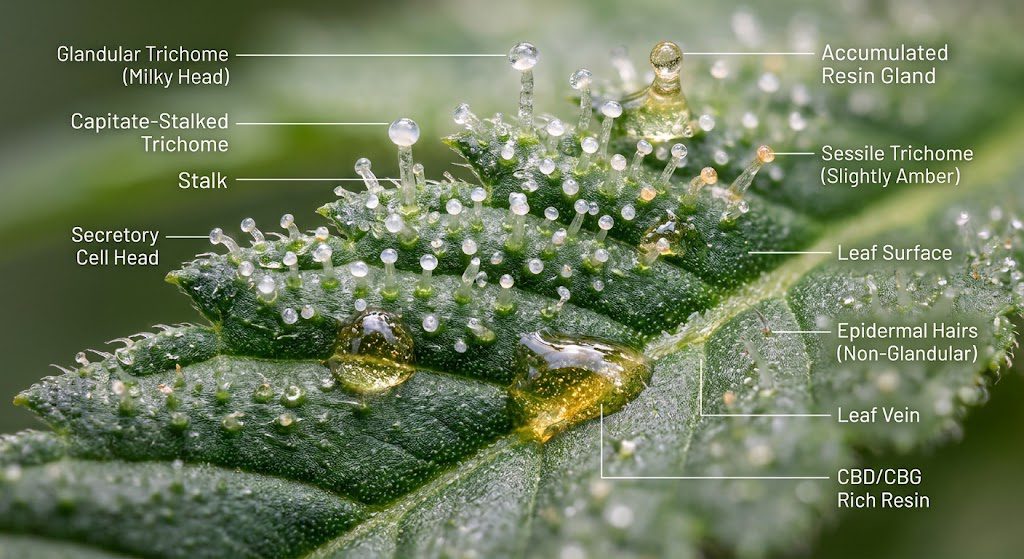
When examining industrial hemp plants up close, you might notice a shimmering, frost-like coating covering the surface of the flowers and leaves. These microscopic structures are hemp trichomes, specialised epidermal outgrowths that play a fundamental role in the biology and chemical profile of the cannabis sativa plant. While they may look simple to the naked eye, these tiny gland appendages are botanical powerhouses responsible for synthesising the vast array of valuable compounds that make hemp extracts so unique.
Understanding what these resin glands are and how they function provides deeper insight into plant science and quality extraction practices. Whether you are exploring our educational resources or reviewing botanical overviews on our Purest CBD Australia blog, appreciating the microscopic anatomy of the plant highlights the intricate care required in modern hemp cultivation and processing.
1. What Are Hemp Trichomes and How Do They Form?
Botanically speaking, hemp trichomes are specialised hair-like appendages that emerge from the epidermal layer of the plant. As the hemp plant matures—particularly during the flowering phase—these structures evolve from simple, non-glandular hairs into complex, mushroom-shaped glandular heads. These glandular trichomes act as biological factories, producing and storing viscous resin containing cannabinoids, terpenes, and flavonoids.
There are several distinct morphological types of trichomes found across hemp plants, including bulbous, capitate-sessile, and capitate-stalked variants. The largest and most chemically active among these are the capitate-stalked trichomes, which possess a multi-cellular stalk supporting a large secretory head packed with essential plant oils. This specialised architecture safeguards delicate biochemicals against environmental stressors, UV radiation, and herbivorous insects.
2. Biosynthesis of Cannabinoids and Terpenes
The primary function of hemp trichomes is the biosynthesis and accumulation of secondary metabolites. Inside the secretory cells of the glandular head, metabolic pathways convert precursor molecules into well-known cannabinoids such as cannabidiol (CBD) and cannabigerol (CBG), alongside aromatic terpenes like myrcene, limonene, and beta-caryophyllene.
This localised production ensures that active compounds are synthesised precisely where the plant requires physical defence. The density and chemical profile of these glands vary significantly depending on genetics, environmental factors, and cultivation practices. Regulatory bodies and researchers frequently monitor these botanical attributes to ensure compliance with strict agricultural and therapeutic guidelines, aligning with oversight frameworks outlined by the Therapeutic Goods Administration.
3. Ecological Defence and Environmental Protection
In nature, plants cannot move to escape harsh conditions or predators, making chemical defence essential for survival. The sticky, aromatic resin contained within these botanical glands serves as a multifaceted protective shield. The strong aromas emitted by concentrated terpenes help deter grazing herbivores and insects, while the thick resinous coating offers natural insulation against extreme ambient temperatures and drying winds.
Furthermore, specialised glandular structures act as a biological sunscreen. The translucent or amber-tinted walls filter out harmful ultraviolet radiation, protecting delicate cellular DNA from sun damage during peak daylight hours. This evolutionary adaptation is a testament to the resilience of industrial hemp varieties grown under intense Australian sunlight.
4. Indicators of Maturity and Harvesting Precision
For cultivators and processors, observing these microscopic structures is the most reliable method for determining optimal harvest timing. As the plant approaches full maturity, the colouration of the gland heads undergoes a distinct visual transformation. They typically begin as clear, translucent spheres before turning milky-white and eventually developing an amber or golden hue.
Harvesting at the exact moment when the highest concentration of mature resin glands is present ensures maximum potency and chemical integrity. Professional processing facilities rely on strict analytical testing and careful handling to preserve these fragile structures, preventing mechanical damage or degradation prior to extraction.
Frequently Asked Questions About Hemp Trichomes
What triggers the development of hemp trichomes?
Trichome development is primarily driven by genetics and plant maturity, accelerating rapidly during the flowering stage. Environmental factors such as optimal light exposure, nutrient availability, and ambient temperatures also stimulate increased resin production as a natural protective response.
Do all parts of the hemp plant have resin glands?
No, these specialised glands are not evenly distributed across the entire plant. They are found in the highest concentrations on the unfertilized female flower buds (colas) and surrounding sugar leaves, with very few present on stalks or root systems.
Why are these structures important for quality testing?
Because these glands house the vast majority of the plant’s cannabinoids and aromatic compounds, their abundance and maturity directly dictate the overall chemical profile. Analytical testing laboratories evaluate these extracted compounds to verify potency, purity, and compliance with industry standards.
Conclusion
Ultimately, hemp trichomes represent much more than a simple visual feature of the cannabis plant. These microscopic resin glands are the biological foundation responsible for producing the rich array of compounds utilised in contemporary hemp products. Understanding their formation, ecological purpose, and role in quality harvesting provides valuable perspective for anyone interested in the science of industrial hemp.
Recent Comments