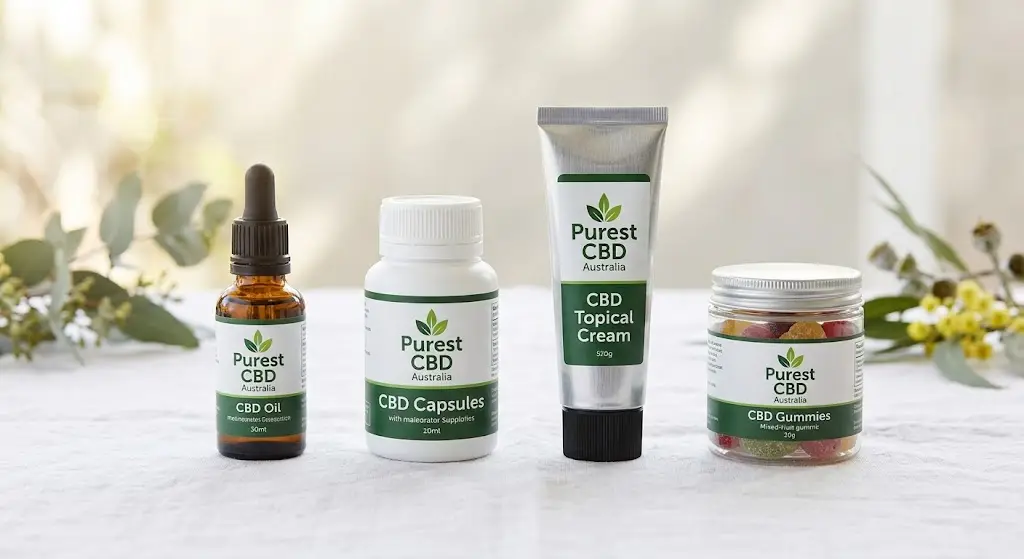
Understanding the variety of CBD Product Formats available on the botanical market is essential for making informed, objective decisions. As hemp extract technology has evolved in Australia, manufacturers have developed distinct delivery vehicles—ranging from liquid sublingual oils to encapsulated powders and topical creams. Each format presents unique structural characteristics, carrier oil matrices, and stability profiles. This educational guide explores four primary CBD Product Formats, examining their compositional differences, manufacturing processes, and how raw broad-spectrum extracts are integrated into finished botanical products under Australian quality standards.
1. Sublingual Drops and Liquid Oil Formats
Sublingual liquid drops represent one of the most widespread CBD Product Formats in the industry. These preparations combine refined broad-spectrum hemp extract with a liquid carrier medium, most commonly medium-chain triglyceride (MCT) oil or hemp seed oil. The primary function of the carrier oil is to solubilise lipophilic phytocannabinoids, facilitating consistent volumetric measuring with a graduated glass dropper.
From a manufacturing standpoint, sublingual formulations offer high chemical stability when protected from light and heat. Because liquid tinctures do not require complex encapsulation or solidifying agents, they maintain a streamlined ingredient profile. For comprehensive insights into botanical extract composition and educational resources, explore our CBD Blog.
2. Encapsulated Softgels and Oral Capsules
Encapsulated preparations offer a pre-measured solid or liquid-filled alternative among CBD Product Formats. Softgel capsules typically enclose broad-spectrum extract suspended in an oil matrix within a gelatin or plant-based shell, whereas hard capsules may utilise micro-encapsulated hemp powders. This physical encasement shields the internal cannabinoid compounds from environmental oxygen, helping to minimise oxidative degradation over time.
Oral capsules provide a uniform unit dose, eliminating the need for dropper measuring. The formulation process requires careful temperature management during encapsulation to ensure the shell integrity remains uncompromised while preserving heat-sensitive terpenes and minor phytocannabinoids.
3. Topical Creams, Balms, and Salves
Topical preparations are specialised CBD Product Formats designed exclusively for external application to the skin surface. Unlike ingestible liquids or capsules, topicals blend broad-spectrum hemp extracts with lipid bases such as shea butter, beeswax, or emulsified cosmetic emulsions. These carrier bases act as physical barrier agents that allow localized interaction with cutaneous tissue.
Formulating topical products requires balanced emulsification to ensure cannabinoids remain evenly suspended throughout the matrix without separating over time. Laboratory testing verifies that topical batches maintain homogeneous potency across every jar or tube, adhering to rigorous cosmetic and manufacturing standards.
4. Edibles and Infused Botanical Gummies
Edible gummies and chewables represent a popular solid oral category among modern CBD Product Formats. Creating stable hemp-infused gummies involves blending refined broad-spectrum extract into a pectin or gelatin base alongside natural sweeteners and flavourings. Achieving consistent potencies in edible formats requires precise thermal control during manufacturing, as excessive heat can degrade delicate botanical compounds.
Evaluating CBD Product Formats for Quality and Stability
When comparing different CBD Product Formats, evaluating product integrity requires assessing batch-specific testing documentation and packaging standards. Regulatory oversight and quality frameworks in Australia are guided by statutory bodies including the Therapeutic Goods Administration (TGA), which sets clear boundaries regarding compliance, product safety, and therapeutic claim restrictions. To learn more about navigating product choices responsibly, consult our detailed CBD buying guide.
Regardless of the chosen format, every finished botanical product should be accompanied by a Certificate of Analysis (COA) confirming cannabinoid concentration, non-detectable THC levels, and freedom from contaminants such as heavy metals or residual solvents.
Frequently Asked Questions About CBD Product Formats
What are the primary differences between sublingual oils and softgel capsules?
Sublingual oils are liquid preparations measured using a graduated dropper, allowing adjustable volume control. Softgel capsules enclose a pre-measured quantity of broad-spectrum extract within a protective shell, offering precise unit consistency and shielding the contents from light and air oxidation.
Do different CBD Product Formats require distinct storage methods?
Yes. While all hemp extracts benefit from storage in a cool, dark location away from direct sunlight, specific formats have unique temperature thresholds. For instance, topical salves and edible gummies may soften or melt at elevated temperatures, whereas liquid oils remain stable at standard ambient temperatures.
How does carrier oil integration vary across CBD Product Formats?
Liquid oils and softgels typically rely on lipophilic carriers such as MCT oil to hold cannabinoids in stable solution. In contrast, topical formats combine hemp extract with thicker waxes, plant butter, and emulsifiers to create smooth, spreadable creams for dermal application.
Summary of CBD Product Formats
Understanding the distinct characteristics of various CBD Product Formats empowers consumers to select finished products that align with their specific structural preferences and storage requirements. Whether evaluating liquid drop formulations, sealed softgel capsules, dermal creams, or edible solids, prioritising batch-tested broad-spectrum quality remains the cornerstone of botanical standards in Australia.
Recent Comments