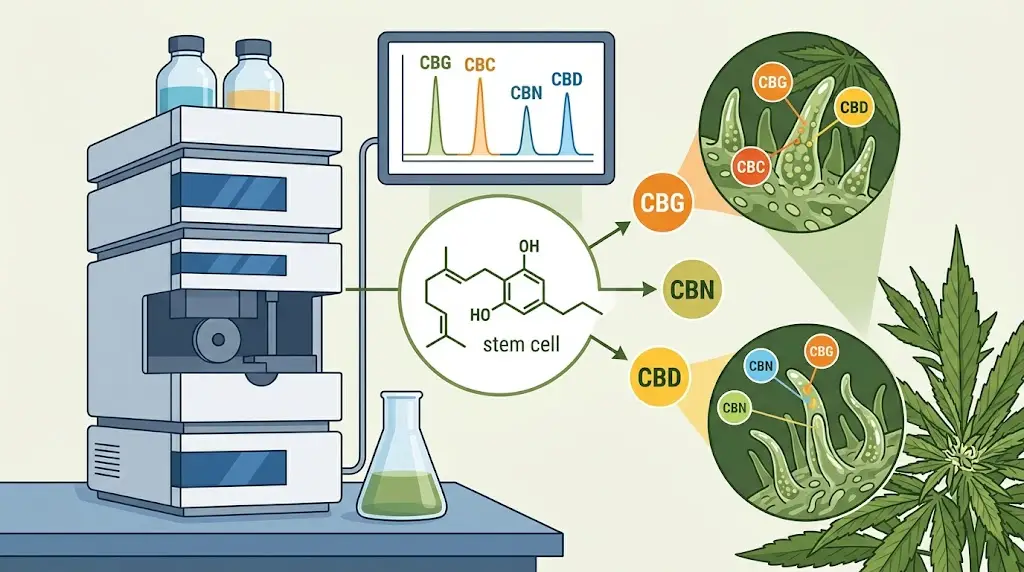
When exploring industrial hemp plant science, hemp minor cannabinoids represent a fascinating area of botanical research. While major compounds like cannabidiol (CBD) often receive the primary focus in commercial discussions, the hemp plant naturally produces dozens of secondary phytocannabinoids in lower concentrations. These secondary compounds, including cannabigerol (CBG), cannabichromene (CBC), and cannabinol (CBN), play an integral role in the plant’s overall chemical composition. Understanding how these distinct molecules interact within broad-spectrum formulations provides valuable educational perspective for consumers navigating botanical products in Australia.
What Are Secondary Phytocannabinoids in Industrial Hemp?
Industrial hemp (Cannabis sativa) is a complex botanical species capable of synthesising over one hundred distinct phytocannabinoid compounds within its trichomes. The most prominent phytocannabinoid is cannabidiol, but secondary plant constituent profiles exist naturally alongside it in smaller, trace quantities.
In raw plant material, these molecules originate as acidic precursors synthesised through specialized metabolic pathways. As the plant matures and undergoes controlled post-harvest processing—such as gentle thermal decarboxylation—these acidic precursors convert into their active neutral forms. Because minor compounds occur in far smaller percentages than CBD, advanced extraction and chromatographic refinement techniques are required to isolate or retain them in finished broad-spectrum extracts.
5 Essential Facts About Hemp Minor Cannabinoids
To better understand the botanical science behind secondary phytocannabinoids, consider these five key educational insights:
- Cannabigerol (CBG) Serves as the Botanical Precursor: Often referred to by plant scientists as the “stem cell” or parent cannabinoid, cannabigerol acid (CBGA) is the foundational molecule from which major cannabinoids like CBD and THC are synthesised during plant growth. As enzymes convert CBGA throughout the growing cycle, only minor residual amounts of CBG remain in mature hemp flower.
- Cannabichromene (CBC) Retains Non-Intoxicating Properties: Cannabichromene is a naturally occurring, non-intoxicating phytocannabinoid found in trace amounts within industrial hemp. Like CBD, CBC does not produce intoxicating effects, making its presence in broad-spectrum extracts suitable for standard daily botanical formulations.
- Cannabinol (CBN) Results from Natural Oxidation: Unlike compounds synthesised directly through primary enzymatic activity, cannabinol is formed when tetrahydrocannabinol (THC) is exposed to oxygen, light, or heat over time. In compliant broad-spectrum hemp extracts, non-detectable THC levels ensure that any residual CBN present remains minimal and stable without legal or regulatory concerns in Australia.
- They Contribute to Broad-Spectrum Botanical Integrity: When industrial hemp extracts are refined to remove detectable levels of THC, the retention of secondary phytocannabinoids helps preserve the natural diversity of the plant profile. This naturally occurring matrix of compounds is a defining feature of premium broad-spectrum products compared to pure isolated CBD single-molecule preparations.
- Analytical Testing Verifies Minor Cannabinoid Profiles: Modern high-performance liquid chromatography (HPLC) testing allows independent laboratories to measure minor phytocannabinoids down to fraction-of-a-percent concentrations. Reviewing batch-specific Certificates of Analysis ensures transparency regarding the exact cannabinoid spectrum present in finished products.
Regulatory Compliance and Standardisation in Australia
In Australia, the regulatory framework governing hemp-derived botanical products is overseen by regulatory authorities, including guidance issued by the Therapeutic Goods Administration (TGA). Commercial hemp preparations must strictly adhere to legal limits regarding total THC content, ensuring products remain non-intoxicating and compliant with Commonwealth standards.
When evaluating botanical options on the Purest CBD Australia blog or reviewing our comprehensive CBD buying guide for Australia, consumers should look for clear labelling and verified laboratory reports. Proper standardisation ensures that broad-spectrum formulations deliver consistent levels of non-intoxicating cannabinoids without exceeding statutory thresholds.
Frequently Asked Questions About Hemp Minor Cannabinoids
Are hemp minor cannabinoids intoxicating?
No. Secondary phytocannabinoids such as CBG, CBC, and CBN in broad-spectrum hemp extracts do not produce intoxicating or mind-altering effects. They are non-intoxicating plant compounds.
How do minor cannabinoids differ from CBD isolate?
CBD isolate consists exclusively of isolated cannabidiol purified to approximately 99%, removing all other plant compounds. In contrast, formulations containing minor plant constituents retain a broader range of naturally occurring plant compounds alongside CBD.
How can I verify which minor cannabinoids are in my product?
You can verify the exact breakdown of minor cannabinoids by reviewing the product’s third-party Certificate of Analysis (COA). Independent laboratory analysis details the exact percentage or milligram concentration of CBG, CBC, CBN, and CBD in every batch.
Understanding the scientific complexity of hemp minor cannabinoids empowers Australian consumers to make well-informed decisions when comparing broad-spectrum hemp preparations. By recognising the roles of CBG, CBC, and CBN within botanical extracts, you can better evaluate product labels, laboratory testing, and extraction quality standards across the market.
Recent Comments