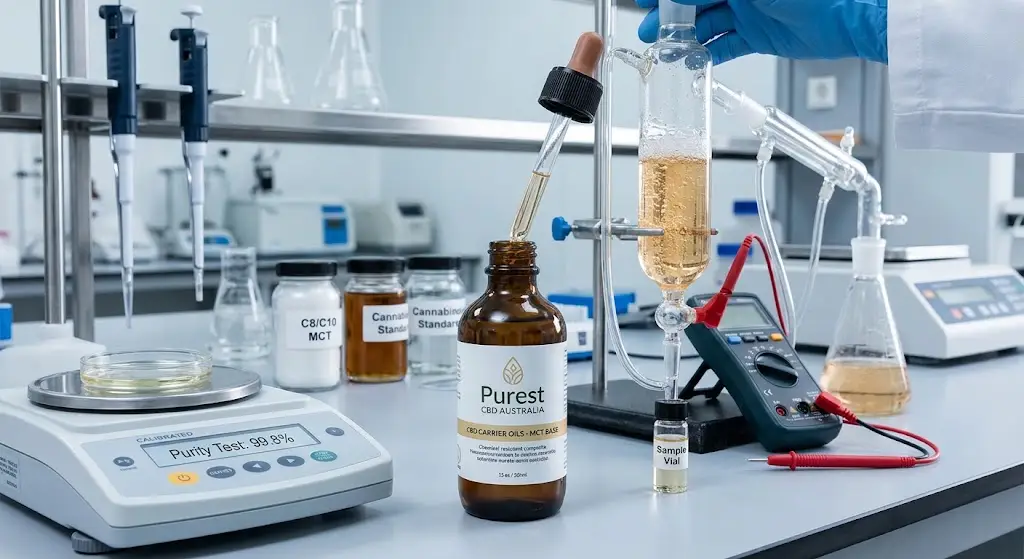
When evaluating hemp extract products, understanding CBD Carrier Oils is an essential step in assessing overall product formulation, purity, and stability. Because raw cannabinoid extracts are lipophilic substances, they require a suitable lipid base to create a uniform, usable liquid solution. The choice of carrier oil plays a pivotal role in maintaining formulation integrity, preventing active compound degradation, and ensuring consistent distribution throughout every batch produced under strict quality frameworks.
Understanding CBD Carrier Oils and Their Role in Formulation
In cannabinoid science, CBD Carrier Oils serve as the primary solvent and delivery vehicle for concentrated hemp extracts. Purified hemp extract in its raw form is a dense, highly viscous resin that cannot be easily measured or administered with precision. Blending the extract into a refined lipid medium standardises the concentration, allowing for accurate volumetric measurement.
Beyond simple dilution, carrier lipid bases protect light-sensitive and oxygen-sensitive cannabinoids from rapid oxidation. Furthermore, fat-soluble compounds require dietary lipids to form micelles within the digestive tract, facilitating efficient interaction with cellular membranes. Quality assurance protocols must therefore evaluate both the cannabinoid extract and the carrier base to ensure total product integrity in line with Therapeutic Goods Administration (TGA) guidance regarding complementary goods and product safety.
5 Key Types of CBD Carrier Oils Evaluated in Quality Testing
Laboratories and formulators assess several lipid bases when testing finished hemp products. Each lipid profile offers distinct structural characteristics, shelf-life capabilities, and fatty acid compositions:
- MCT Oil (Medium-Chain Triglycerides): Typically derived from coconut or palm kernel oil, MCT oil consists primarily of caprylic (C8) and capric (C10) fatty acids. Its low molecular weight, clear appearance, neutral flavour, and exceptional oxidative stability make it the industry benchmark for standard liquid formulations.
- Hemp Seed Oil: Cold-pressed from the seeds of Cannabis sativa, hemp seed oil provides a rich profile of essential fatty acids, including omega-3 (alpha-linolenic acid) and omega-6 (linoleic acid) in a 3:1 ratio. While it adds a natural earthy flavour, its higher polyunsaturated fat content requires careful storage to prevent rancidity over time.
- Extra Virgin Olive Oil (EVOO): High in monounsaturated fats (principally oleic acid) and natural antioxidants like polyphenols, olive oil offers strong resistance to oxidation. However, its pronounced taste and higher viscosity can affect liquid presentation.
- Grape Seed Oil: Lightweight and mild, grape seed oil contains high levels of linoleic acid and vitamin E. Its moderate stability profile requires rigorous testing to ensure shelf longevity under varying environmental conditions.
- Sunflower Seed Oil: Refined high-oleic sunflower oil provides a light texture and neutral palate, making it a viable alternative lipid base when formulated with appropriate natural preservatives such as mixed tocopherols.
Quality Testing Standards for CBD Carrier Oils
A rigorous quality verification process for CBD Carrier Oils involves independent laboratory analysis across several critical purity markers. Ensuring that the carrier base is free from oxidation and external contaminants is as vital as testing the cannabinoid compound itself.
Key testing parameters include:
- Peroxide Value (PV) & Anisidine Value (AV): These chemical measurements evaluate primary and secondary oxidation products within the oil. Low PV and AV scores confirm that the carrier lipid has not undergone rancidification during storage or blending.
- Heavy Metal and Pesticide Screening: Because plant-derived oils can concentrate agricultural residues, testing ensures non-detectable levels of lead, cadmium, arsenic, mercury, and synthetic pesticides.
- Fatty Acid Profile Analysis: Gas chromatography (GC) testing verifies the precise fatty acid spectrum of the carrier, confirming authenticity and ensuring no adulteration with low-grade mineral or vegetable oils has occurred.
- Residual Solvent Analysis: Ensures that any solvents used during carrier oil refining (such as hexane) have been completely removed prior to product assembly.
Frequently Asked Questions About CBD Carrier Oils
Why are CBD carrier oils necessary in liquid formulations?
Cannabinoids are naturally fat-soluble (lipophilic) compounds. Mixing raw hemp extract with refined lipid bases ensures an even, stable distribution of active compounds, preventing precipitation and allowing for precise batch-to-batch consistency.
How do laboratories test CBD carrier oils for purity?
Independent testing laboratories utilise gas chromatography-mass spectrometry (GC-MS) and high-performance liquid chromatography (HPLC) to analyze fatty acid compositions, screen for residual pesticides and heavy metals, and measure peroxide values to verify freshness.
Does the choice of carrier oil affect product shelf life?
Yes. Carrier oils high in saturated fats, such as MCT oil, possess high oxidative stability and resist degradation for extended periods. Oils with higher polyunsaturated fatty acid content, such as unrefined hemp seed oil, are more susceptible to light and heat oxidation and require amber glass packaging and cool storage conditions.
In summary, evaluating CBD Carrier Oils forms an integral part of comprehensive quality verification for cannabinoid formulations. By examining carrier oil purity, fatty acid profiles, oxidation resistance, and freedom from contaminants, consumers and industry professionals can ensure that finished products maintain high structural standards. For further educational resources on cannabinoid science and testing standards, explore the Purest CBD Australia blog index or visit Purest CBD Australia.
Recent Comments