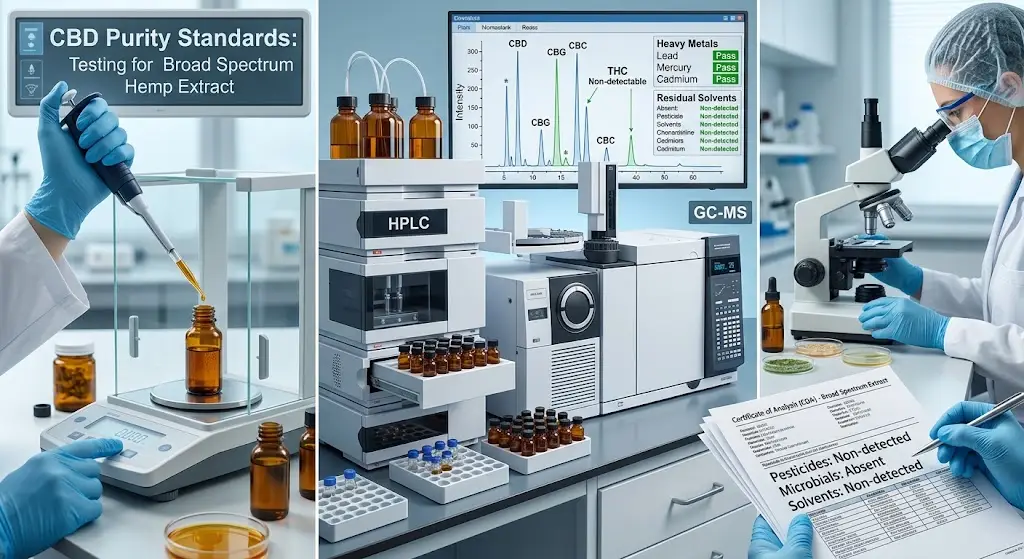
As the Australian botanical landscape continues to mature, understanding CBD Purity Standards has become a central priority for consumers evaluating hemp-derived extracts. Botanical hemp processing involves complex extraction and refining procedures designed to separate desirable plant compounds from unwanted plant matter. Ensuring that an extract meets strict quality and safety criteria requires rigorous laboratory evaluation across every stage of production. For anyone exploring non-intoxicating hemp products, reviewing comprehensive educational resources on our CBD Blog provides vital context on how modern extraction methods safeguard product integrity.
Understanding CBD Purity Standards in Australian Hemp Extracts
At its core, purity in botanical manufacturing refers to the precise concentration of active phytocannabinoids relative to the absence of unwanted contaminants or residual compounds. Industrial hemp plants possess natural bioaccumulative properties, meaning they readily absorb substances from the soil in which they grow. While this characteristic makes hemp an excellent agricultural crop, it necessitates meticulous quality control during cultivation, harvesting, and final processing.
In Australia, regulatory oversight surrounding botanical and therapeutic goods is managed by governing bodies such as the Therapeutic Goods Administration, which establishes strict frameworks for health product safety, analytical testing, and quality assurance. Adhering to recognized standard operating procedures ensures that broad-spectrum hemp extracts maintain consistent cannabinoid profiles while remaining entirely free of pesticides, heavy metals, microbial matter, and organic solvents.
5 Key Factors Defining CBD Purity Standards
To evaluate whether a broad-spectrum hemp product satisfies essential safety and quality criteria, analytical laboratories inspect five foundational parameters during testing:
- 1. Heavy Metal and Environmental Screening: Because hemp plants absorb minerals and trace elements from agricultural soil, testing for heavy metals such as lead, cadmium, arsenic, and mercury is essential. High-purity extracts undergo atomic absorption spectroscopy or mass spectrometry to confirm that heavy metal concentrations remain far below established safety thresholds.
- 2. Residual Solvent Analysis: Modern extraction techniques frequently utilize solvents like supercritical carbon dioxide (CO2) or food-grade ethanol to separate cannabinoids from raw botanical biomass. Residual solvent screening verifies that all volatile liquids or gases used during extraction are completely removed during the purification process, leaving zero detectable chemical residues.
- 3. Microbial and Mycotoxin Testing: Organic plant materials can occasionally harbor mould spores, yeast, or bacteria if improperly harvested or stored. Rigorous microbial testing screens for harmful micro-organisms, including Escherichia coli, Salmonella, and fungal toxins known as mycotoxins, ensuring the raw material remains pristine.
- 4. Phytocannabinoid Profile and Potency: Verifying cannabinoid potency ensures that the finished extract contains exact declared quantities of cannabidiol (CBD) along with beneficial minor cannabinoids such as cannabigerol (CBG) and cannabichromene (CBC). Additionally, broad-spectrum formulations are tested to confirm non-detectable levels of delta-9-tetrahydrocannabinol (THC), maintaining compliance with Australian legal requirements.
- 5. Batch-Specific Certificates of Analysis (COA): A Certificate of Analysis generated by an accredited, independent third-party testing laboratory provides transparent documentation for every production run. Reviewing a batch-specific COA allows consumers to independently verify total cannabinoid content and confirm the complete absence of contaminants before purchase.
Frequently Asked Questions About CBD Purity Standards
Why are CBD Purity Standards important for Australian consumers?
Establishing clear purity standards guarantees that hemp extracts are pure, consistent, and free from agricultural contaminants or chemical residues. It provides consumers with objective verification regarding product quality, cannabinoid concentration, and broad-spectrum composition.
How do independent laboratories verify hemp extract purity?
Independent testing laboratories utilize advanced analytical instruments, such as High-Performance Liquid Chromatography (HPLC) and Gas Chromatography-Mass Spectrometry (GC-MS). These high-precision instruments separate, identify, and quantify individual cannabinoids, terpenes, residual solvents, and potential environmental trace contaminants.
What is the difference between broad-spectrum purity and CBD isolate?
Broad-spectrum extracts maintain a refined spectrum of naturally occurring cannabinoids, terpenes, and flavonoids while selectively filtering out THC. In contrast, CBD isolate consists strictly of isolated cannabidiol molecules without complementary plant compounds. Both formats require rigorous testing to meet established quality benchmarks.
Maintaining Quality Assurance and Consumer Confidence
Prioritising transparency and analytical validation is fundamental to establishing long-term confidence in Australian botanical extracts. By understanding how raw hemp biomass is processed, filtered, and subjected to third-party laboratory verification, consumers can confidently interpret product labels and test reports. For additional guidance on selecting verified hemp products and understanding regulatory standards, visit our Frequently Asked Questions page. Ultimately, strict adherence to robust CBD Purity Standards ensures that every batch delivers pure, high-quality broad-spectrum hemp extract built on botanical integrity.
Recent Comments