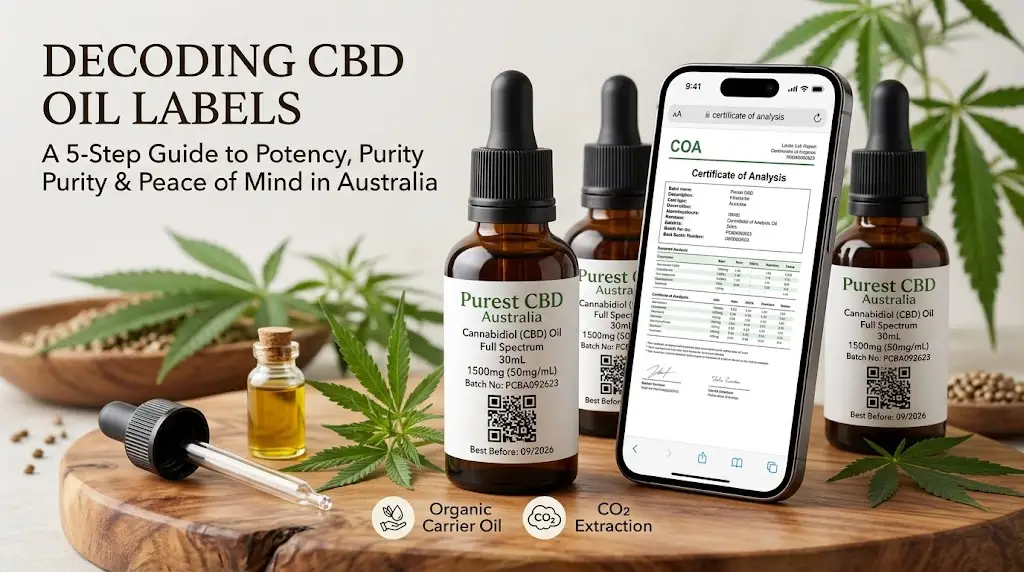
Navigating the hemp and cannabinoid landscape in Australia requires clarity, transparency, and accurate product information. Learning how to properly interpret CBD Oil Labels empowers consumers to make well-informed, objective choices based on verified product specifications rather than marketing claims. As regulatory standards evolve across the country, understanding what appears on packaging—and what should be audited—is an essential skill for anyone exploring broad-spectrum or isolate formulations.
Whether evaluating formulation strength, carrier ingredients, or batch transparency, knowing how to decode packaging safeguards quality and consumer safety. For more background on educational standards and market insights, explore our comprehensive Purest CBD blog guides.
1. Why Reading CBD Oil Labels Is Critical for Consumers
In Australia, therapeutic and botanical products are subject to strict oversight by regulatory bodies such as the Therapeutic Goods Administration (TGA). Understanding CBD Oil Labels helps ensure that any product under consideration adheres to rigorous quality benchmarks, correct formatting, and accurate concentration reporting.
Misleading marketing or ambiguous product descriptions can make it difficult to determine exact cannabinoid quantities. By carefully examining packaging, consumers can confirm that the product contains the declared concentration of active compounds, uses clean carrier bases, and provides full traceability back to independent laboratory verification.
2. The 5 Essential Components of Authentic CBD Oil Labels
When reviewing product packaging, five core structural elements should always be visible and clearly articulated on compliant, high-quality products:
1. Total Cannabinoid Concentration and Volume
Accurate CBD Oil Labels will prominently list both the total milligram (mg) count of active cannabinoids in the bottle and the total liquid volume in millilitres (mL). Additionally, top-tier formulations specify the milligram content per dose or per millilitre (e.g., 50 mg/mL). This distinction prevents confusion between overall bottle strength and individual serving concentrations.
2. Complete Ingredient and Carrier Oil Disclosure
Cannabinoid extracts require a suitable liquid carrier oil to ensure stable suspension and uniform delivery. Standard carrier options include organic hemp seed oil, medium-chain triglyceride (MCT) coconut oil, or extra virgin olive oil. Labels must list every ingredient in descending order of volume, without hidden additives, artificial flavours, or unlisted preservatives.
3. Batch Identification Number and QR Code
Traceability is the hallmark of premium manufacturing. Reliable labels incorporate a unique batch or lot number along with a scannable QR code. Scanning this code should direct you directly to a third-party Certificate of Analysis (COA) corresponding to that specific batch, verifying potency and safety parameters.
4. Expiry Date and Recommended Storage Conditions
Hemp-derived compounds and natural carrier oils degrade over time when exposed to heat, light, and oxygen. Compliant packaging includes a clear manufacture date, expiration date, and explicit storage recommendations (such as storing in a cool, dark place below 25°C) to maintain stability throughout shelf life.
5. Manufacturer Transparency and Origin Details
Packaging should display clear contact information for the brand or distributor, including country of origin and extraction methodologies (such as supercritical CO2 extraction). Transparent sourcing guarantees accountability across every stage of production.
3. How to Cross-Reference CBD Oil Labels with Independent Lab Reports
A label is only as reliable as the independent laboratory testing that supports it. To verify that product packaging is accurate, consumers should cross-reference the batch number printed on the bottle with the official Certificate of Analysis provided by an accredited third-party testing facility.
When reviewing the lab report against the packaging, confirm the following data points:
- Potency Matching: The total mg of CBD shown on the COA should match the concentration declared on the label within a standard 5–10% variance allowance.
- Profile Accuracy: For broad-spectrum products, the lab report should confirm the presence of minor non-intoxicating cannabinoids (such as CBG or CBN) while verifying non-detectable THC levels.
- Purity Testing: Ensure the lab report includes heavy metal, pesticide, residual solvent, and microbiological screening to confirm clean extraction standards.
Frequently Asked Questions About CBD Oil Labels
What is the most critical detail to check on CBD oil labels in Australia?
The most critical detail is the clear statement of active cannabinoid concentration (in mg/mL) paired with a unique batch number that links directly to an independent Certificate of Analysis (COA).
Why do high-quality CBD oil labels include a QR code?
QR codes provide immediate, transparent access to third-party batch test results. This allows consumers to independently verify cannabinoid potency and purity before using the product.
How do carrier oils affect the information presented on the label?
Carrier oils determine the product’s base profile and potential allergens (e.g., tree nuts for coconut MCT oil). A transparent label will clearly list the exact carrier oil used, helping consumers select formulations tailored to their personal dietary preferences.
Final Summary on Evaluating CBD Oil Labels
Understanding how to read CBD Oil Labels is essential for evaluating quality, authenticity, and regulatory compliance in the Australian market. By paying close attention to cannabinoid potency, carrier ingredient lists, storage guidance, and batch-matched laboratory certificates, consumers can navigate product options with complete confidence. Always prioritise products that demonstrate total transparency from farm to final packaging.
Recent Comments