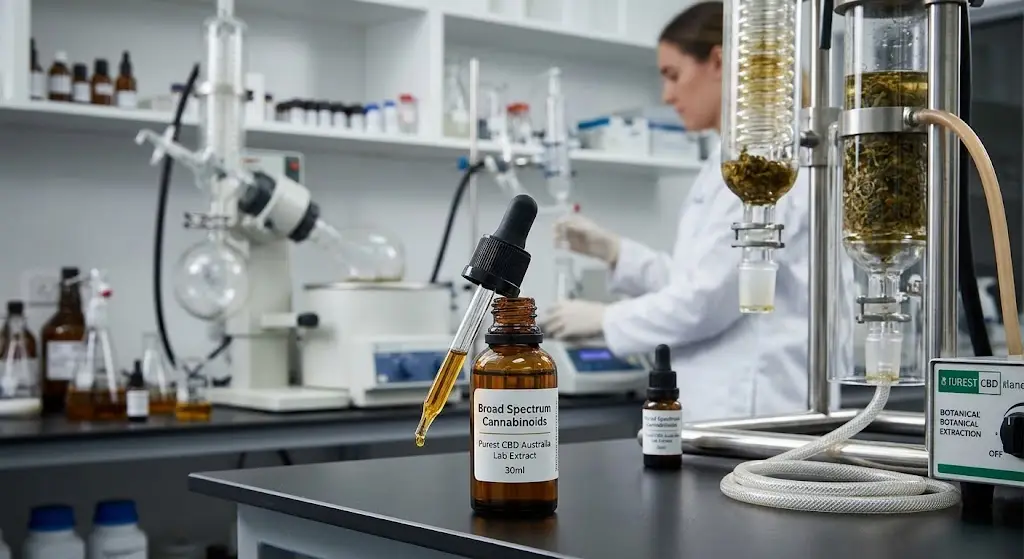
Understanding the botanical composition of hemp-derived products is essential when evaluating quality and processing standards. Among the various extract categories available today, Broad Spectrum Cannabinoids represent a specific processing outcome designed to preserve multiple plant compounds while selectively removing tetrahydrocannabinol (THC). By maintaining secondary cannabinoids and aromatic terpenes without detectable levels of THC, broad-spectrum formulations offer a distinct profile within educational hemp literature. At Purest CBD Australia, clarifying product terminology and processing methodologies helps consumers and researchers better navigate modern botanical standards.
Understanding Broad Spectrum Cannabinoids and Their Extraction
The manufacturing process used to isolate and refine broad-spectrum hemp extracts involves sophisticated chromatographic separation techniques. Raw industrial hemp initially contains a full spectrum of plant constituents, including cannabidiol (CBD), minor cannabinoids, terpenes, flavonoids, and trace amounts of THC. To create a broad-spectrum refined extract, processors subject the crude hemp oil to specialised winterisation, decarboxylation, and distillation phases.
Following primary extraction—most commonly performed using supercritical carbon dioxide (CO2) or food-grade ethanol—the crude extract undergoes liquid chromatography or selective flash chromatography. This additional step targets and removes THC molecules based on their distinct chemical polarity and molecular mass, leaving behind an array of non-intoxicating plant compounds. The final output is a refined botanical matrix where Broad Spectrum Cannabinoids remain intact, allowing the oil to retain its natural aromatic profile without detectable levels of controlled substances.
Broad Spectrum Cannabinoids vs Other Hemp Extract Profiles
To appreciate how broad-spectrum extracts function within processing taxonomy, it is helpful to contrast them with isolate and full-spectrum alternatives:
- Full Spectrum Extracts: These raw or minimally refined extracts retain all naturally occurring compounds present in the hemp flowering heads, including trace amounts of THC (typically under regulatory thresholds of 0.3% or 0.2% raw plant mass).
- Broad Spectrum Extracts: These extracts undergo specialised secondary processing to eliminate THC while preserving minor cannabinoids such as cannabigerol (CBG), cannabinol (CBN), and cannabichromene (CBC), alongside plant terpenes.
- CBD Isolate: Isolate refers to a highly purified crystalline compound that contains strictly 99%+ pure cannabidiol, stripped entirely of all secondary cannabinoids, terpenes, and plant waxes.
By offering a mid-tier balance between single-molecule isolates and whole-plant full-spectrum extracts, broad-spectrum formulations highlight the diverse chemical complexity of refined industrial hemp.
Key Quality Indicators for Broad Spectrum Cannabinoids
Evaluating the integrity of broad-spectrum products relies heavily on third-party analytical verification. Standardised laboratory evaluation ensures that extraction facilities successfully eliminate trace THC while maintaining stated cannabinoid concentration levels across batches.
In Australia, regulatory oversight regarding hemp processing and botanical product standards is overseen by relevant health authorities, including guidelines established by the Therapeutic Goods Administration (TGA). Comprehensive quality control procedures require batch-specific testing via High-Performance Liquid Chromatography (HPLC) or Gas Chromatography-Mass Spectrometry (GC-MS).
Independent Certificate of Analysis (CoA) reports verify the following critical purity parameters:
- Cannabinoid Profile Quantitation: Confirms active percentages of CBD, CBG, CBN, and CBC, while verifying non-detectable (ND) levels of Delta-9 THC.
- Heavy Metal Screening: Ensures levels of lead, cadmium, arsenic, and mercury remain well below acceptable safety thresholds.
- Pesticide & Residual Solvent Analysis: Validates that no harmful agricultural chemicals or extraction solvents remain in the final concentrate.
- Microbial Testing: Verifies the total absence of moulds, yeast, salmonella, and E. coli bacteria.
Analytical Verification and Labelling Standards
Clear labelling and accurate batch documentation are essential pillars of botanical quality assurance. When reviewing product documentation, consumers should look for matching batch numbers on the product packaging that correspond directly with official third-party analytical results.
Proper storage conditions also play a fundamental role in preserving compound stability. Broad-spectrum extracts should be stored in dark glass containers away from direct sunlight, excess heat, and oxygen exposure. Oxidation can gradually degrade secondary cannabinoids and volatile terpene profiles over time, leading to altered product consistency and reduced shelf life.
Frequently Asked Questions About Broad Spectrum Cannabinoids
What defines broad spectrum hemp extract?
Broad spectrum hemp extract is a refined botanical concentrate that retains multiple non-intoxicating cannabinoids and terpenes while undergoing specialised processing to remove detectable trace levels of THC.
How do lab reports confirm the absence of THC?
Independent laboratories utilise High-Performance Liquid Chromatography (HPLC) testing to measure individual compound concentrations. A comprehensive Certificate of Analysis will reflect “ND” (Not Detected) for THC compounds down to strict limits of quantitation.
How should broad spectrum products be stored to maintain quality?
Products containing broad-spectrum extracts are best stored in air-tight, opaque or amber glass packaging in a cool, dark place. Exposure to direct sunlight and high ambient temperatures can accelerate chemical degradation and oxidation.
Summary of Botanical Extraction Standards
In summary, understanding the scientific background and manufacturing precision required to isolate Broad Spectrum Cannabinoids provides valuable insight into modern hemp processing. By prioritising third-party laboratory verification, proper packaging, and clear batch transparency, users can assess extract quality with confidence. Explore more comprehensive insights and product guides across our CBD Education guides.
Recent Comments