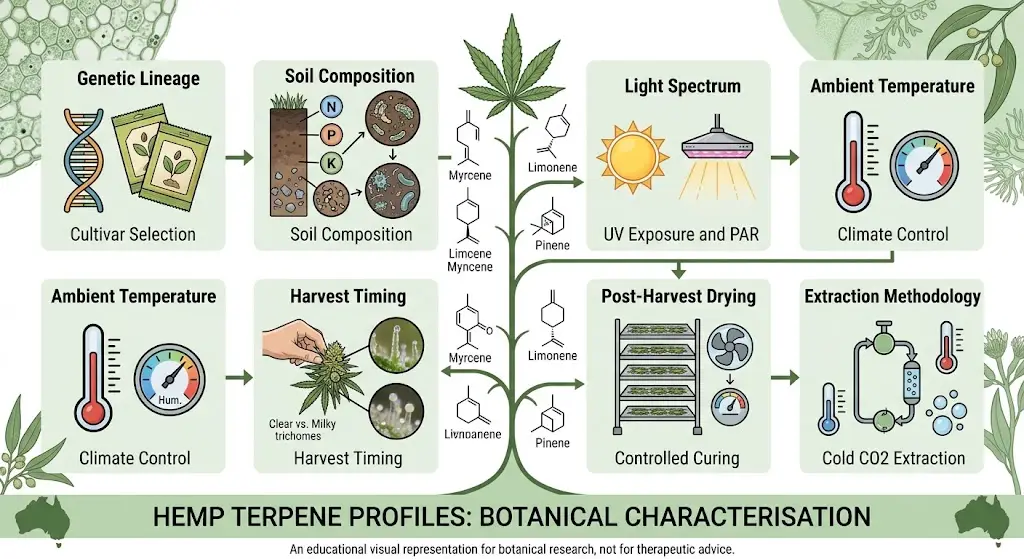
Understanding Hemp Terpene Profiles is an essential aspect of modern botanical science and plant research. Industrial hemp (Cannabis sativa) produces a remarkably diverse spectrum of organic compounds, among which terpenes play a pivotal role in establishing aromatic identity, structural complexity, and natural plant defense mechanisms. For researchers, industry professionals, and consumers exploring the Purest CBD Australia educational guides, examining the underlying science of these aromatic hydrocarbon molecules provides invaluable insights into how cultivation, harvest, and processing techniques shape the final botanical profile.
Terpenes are naturally occurring, volatile organic compounds synthesised within the specialized glandular trichomes of the hemp plant. These tiny, resinous structures cover the surface of female hemp flowers and leaves, serving as the biochemical factories responsible for producing both phytocannabinoids and aromatic terpenes. Across the plant kingdom, terpenes fulfill essential physiological functions, including protecting plants against herbivores, deterring pathogens, mitigating environmental radiation stress, and attracting beneficial pollinators. In industrial hemp, over 200 distinct terpenes have been identified, each contributing to a unique organoleptic profile that ranges from citrus and floral notes to earthy, pine, and spicy undertones.
Understanding Hemp Terpene Profiles in Botanical Science
From a chemical perspective, terpenes are built from repeating five-carbon units known as isoprene units (C5H8). Depending on the number of linked isoprene units, these molecules are classified into monoterpenes (containing two isoprene units, such as myrcene, limonene, and pinene) and sesquiterpenes (containing three isoprene units, such as beta-caryophyllene and humulene). Monoterpenes are smaller, highly volatile compounds that vaporise readily at lower temperatures, providing immediate sharp or bright aromas. In contrast, sesquiterpenes possess higher molecular weights and lower volatility, giving rise to deeper, longer-lasting earthy or woody aromas.
In Australian botanical research and regulatory science, the study of terpene distribution highlights how these volatile molecules interact within the broader plant matrix. The Australian Therapeutic Goods Administration (TGA) maintains rigorous standards regarding raw material quality, analytical testing, and standardized botanical characterisation. Evaluating terpene composition through laboratory techniques such as Gas Chromatography-Mass Spectrometry (GC-MS) allows researchers to map out complete chemical fingerprints, ensuring consistency, purity, and batch integrity without relying on subjective sensory evaluation.
7 Key Factors Influencing Hemp Terpene Profiles
The expression and retention of aromatic terpenes in hemp crops depend on numerous environmental, biological, and technological factors throughout the cultivation lifecycle. Below are the seven key elements that directly influence the development and preservation of these delicate plant compounds:
- 1. Genetic Lineage and Cultivar Selection: The underlying genetic code of a hemp cultivar establishes its baseline potential for terpene production. Specific genetic strains are naturally predisposed to produce dominant concentrations of particular terpenes, such as myrcene-dominant or pinene-dominant profiles.
- 2. Soil Composition and Nutrient Ratios: Soil health, mineral availability, and microbial activity significantly affect secondary metabolite synthesis. Balanced nitrogen, phosphorus, and potassium levels, combined with micronutrients like magnesium and sulfur, support optimal enzyme activity during terpene biosynthesis.
- 3. Light Spectrum and UV Exposure: Sunlight intensity and light spectrum quality directly trigger trichome development. Exposure to UV-B radiation acts as a natural abiotic stressor, encouraging the plant to produce higher concentrations of protective terpenes and resin.
- 4. Ambient Temperature and Humidity Control: Excessive heat during the flowering phase can cause highly volatile monoterpenes to evaporate prior to harvest. Maintaining moderate daytime temperatures and controlled relative humidity preserves volatile compounds within the trichome heads.
- 5. Harvest Timing and Maturity Assessment: Harvesting hemp at peak trichome maturity—typically when trichomes transition from clear to a milky translucent state—ensures maximum terpene accumulation before oxidation or degradation occurs.
- 6. Post-Harvest Drying and Curing Protocols: Slow, controlled drying in cool, dark, and climate-regulated rooms is critical. Rapid forced drying with high heat strips volatile terpenes, whereas proper curing allows moisture to equalize while preserving aromatic integrity.
- 7. Extraction Methodology and Temperature Limits: Processing methods strongly dictate whether terpenes are retained or lost. Advanced subcritical and supercritical CO2 extraction protocols allow for gentle separation at lower temperatures, preventing thermal denaturation.
Primary Terpenes Characterising Industrial Hemp
While hundreds of terpenes exist in trace quantities, a select group of primary terpenes dominates the chemical profile of most industrial hemp cultivars. Recognizing these primary compounds helps in understanding the diverse aromatic spectrum of the plant:
Myrcene: Recognized as one of the most abundant monoterpenes in hemp, myrcene exhibits a distinctly herbal, earthy, and musky aroma reminiscent of cloves and ripe mangoes. It boils at approximately 166°C and is frequently evaluated in laboratory profile screens.
Beta-Caryophyllene: A prominent sesquiterpene characterized by spicy, peppery, and woody notes, beta-caryophyllene is unique because its chemical structure allows it to interact selectively with specific biological receptors in plant and mammalian biology.
Limonene: Known for its vibrant citrus scent, limonene is a highly volatile monoterpene commonly found in fruit rinds and peppermint as well as hemp. It degrades quickly when exposed to heat and oxygen, requiring careful handling during processing.
Alpha-Pinene and Beta-Pinene: Responsible for the crisp aroma of pine forests, pinene isomers are widely distributed across terrestrial flora. They exhibit high volatility and contribute fresh, sharp top notes to botanical extracts.
Linalool: Exhibiting a light, floral, and lavender-like fragrance, linalool occurs in minor to moderate quantities in hemp, adding floral nuance to overall botanical bouquets.
Humulene: Formally known as alpha-caryophyllene, humulene provides earthy, subtle hop-like characteristics and works synergistically with beta-caryophyllene in many natural hemp varieties.
Preserving Terpenes During Extraction and Storage
Because terpenes are low-boiling-point hydrocarbon molecules, preserving them throughout manufacturing requires specialized handling. Traditional distillation processes that use high heat often degrade or vaporise monoterpenes, altering the original plant profile. Modern cold-extraction methodologies, particularly temperature-controlled supercritical CO2 extraction, separate terpenes efficiently while maintaining their structural integrity.
Once extracted, finished products and raw materials must be protected against three main environmental factors: oxygen, light, and temperature. Exposure to air leads to oxidative degradation, forming terpenoids and altered breakdown products. Ultraviolet light accelerates chemical breakdown, while elevated ambient temperatures increase evaporation rates. To maintain long-term stability, products documented by Purest CBD Australia are best stored in opaque glass containers, tightly sealed, and kept in cool, dark environments.
Frequently Asked Questions About Hemp Terpene Profiles
Q: What are hemp terpene profiles?
A: Hemp terpene profiles represent the unique chemical arrangement and relative concentrations of volatile aromatic compounds produced within the trichomes of industrial hemp plants. These profiles define the plant’s natural scent, flavour characteristics, and botanical identity.
Q: How do extraction methods impact terpene retention?
A: Extraction techniques that employ excessive heat or aggressive solvents can evaporate or destroy delicate monoterpenes. Low-temperature, closed-loop CO2 extraction methods are typically preferred because they isolate aromatic compounds without thermal degradation.
Q: Do terpene profiles vary between different harvest batches?
A: Yes, terpene profiles naturally vary between harvest batches due to subtle changes in seasonal weather, soil nutrition, irrigation, UV exposure, and exact harvest timing, even when cultivating identical plant genetics.
Q: Why is laboratory testing important for evaluating terpenes?
A: Independent laboratory testing using Gas Chromatography (GC) quantifies exact terpene percentages, ensuring batch-to-batch consistency, verifying botanical authenticity, and confirming the absence of unwanted contaminants or synthetic additives.
In summary, examining Hemp Terpene Profiles provides essential clarity on how genetic potential, environmental cultivation, and gentle extraction techniques come together in hemp plant science. By prioritizing rigorous testing standards and careful post-harvest management, researchers and manufacturers continue to expand our understanding of these fascinating aromatic compounds.
Recent Comments