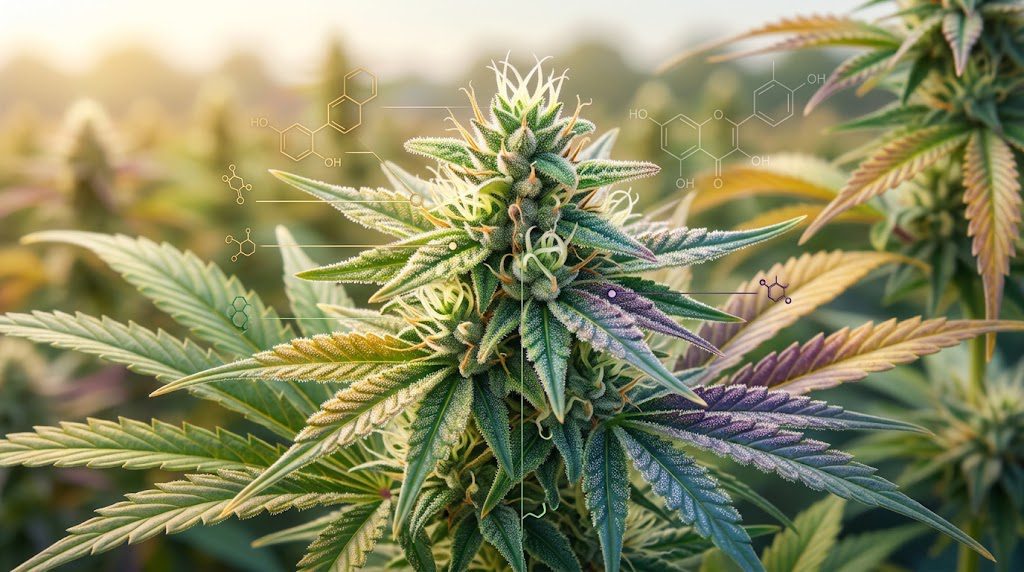
When exploring the complex botanical structure of industrial hemp (Cannabis sativa L.), initial attention often falls on primary phytocannabinoids like cannabidiol (CBD). However, complete plant science encompasses a vast spectrum of non-cannabinoid secondary metabolites. Among these secondary botanical compounds, hemp flavonoids play a vital role in defining the chemical identity, pigmentation, and overall natural profile of legal hemp biomass harvested across Australia.
Flavonoids represent a diverse group of polyphenolic compounds distributed abundantly throughout the plant kingdom. In hemp, these specialised phytonutrients contribute significantly to botanical defence mechanisms, UV protection, and floral pigmentation. Understanding how hemp flavonoids interact alongside terpenes and cannabinoids offers valuable educational perspective for consumers navigating high-quality broad-spectrum hemp products in Australia.
Understanding Hemp Flavonoids and Cannaflavins
While over 20 distinct flavonoids have been identified in industrial hemp plants, a unique subclass known as cannaflavins exists exclusively within the cannabis genus. Specifically, Cannaflavin A, Cannaflavin B, and Cannaflavin C are prenylated flavones synthesised within the glandular trichomes and leaf foliage of legal hemp crops.
These specialised secondary metabolites are produced through intricate biosynthetic pathways combining the phenylpropanoid and polyketide routes. Unlike primary cannabinoids that act upon specific physiological receptors, flavonoids perform structural and protective duties within living plant tissue. In raw botanical biomass, hemp flavonoids serve as natural antioxidants that safeguard cellular structures against oxidative stress caused by ambient solar radiation and atmospheric exposure.
For Australian botanical researchers and consumers alike, evaluating the presence of these unique polyphenols provides deeper insight into plant maturity, harvesting conditions, and raw material purity. Modern laboratory testing protocols, including high-performance liquid chromatography (HPLC), now allow analytical technicians to isolate and quantify these distinctive compounds with remarkable precision.
Why Hemp Flavonoids Matter in Broad-Spectrum Extracts
In clean extraction processes—such as supercritical fluid CO2 extraction—maintaining the natural balance of non-cannabinoid plant compounds is a primary quality standard. While crude refinement methods may strip away volatile botanical elements, gentle cold-temperature extraction techniques preserve minor polyphenols alongside major cannabinoids.
The retention of hemp flavonoids within broad-spectrum formulations contributes to what botanical scientists describe as the broader matrix interaction. In broad-spectrum extracts, zero-THC oil retains a rich profile of native phytochemicals, creating a comprehensive botanical formulation without psychoactive components.
Key reasons why broad-spectrum formulations emphasise flavonoid retention include:
- Phytochemical Integrity: Preserving the naturally occurring ratio of polyphenols, terpenes, and phytocannabinoids reflects authentic plant science.
- Flavour and Aroma Profiles: Flavonoids collaborate with volatile terpenes to establish subtle, natural herbal taste notes in unflavoured broad-spectrum oils.
- Batch Stability: Polyphenolic structures possess inherent antioxidant characteristics that assist in maintaining oil stability during standard shelf-life storage.
7 Essential Insights Into Hemp Flavonoids
To better understand the scientific significance of these botanical compounds, consider the following 7 foundational insights into hemp flavonoids and plant chemistry:
- Botanical Exclusivity: Cannaflavins A and B are unique prenylated flavonoids found naturally only within hemp and cannabis species.
- Biosynthetic Origin: Synthesised primarily within trichomes and foliage, flavonoid production peaks during specific floral development stages.
- Pigmentation Function: Anthocyanins and flavones give hemp foliage its vibrant green, gold, or purple hues depending on environmental conditions.
- Non-Intoxicating Nature: Flavonoids contain zero psychoactive properties, aligning fully with Australian regulatory frameworks for industrial hemp derivatives.
- Protective Shielding: In growing crops, flavonoids act as natural UV filters and defence agents against environmental stress factors.
- Extraction Sensitivity: Temperature-controlled processing is essential to preserve sensitive flavonoid molecules from thermal degradation.
- Analytical Verification: Certificate of Analysis (CoA) documentation from accredited testing laboratories verifies the purity and composition of refined extracts.
Regulatory Standards and Quality Verification in Australia
The Australian landscape for industrial hemp derivatives adheres to strict safety, legal, and educational standards. Regulatory bodies such as the Therapeutic Goods Administration (TGA) oversee regulations regarding low-THC hemp products, ensuring that Australian consumers access fully compliant and verified botanical information.
To learn more about cannabinoid science and extract profiles, visit our comprehensive Purest CBD Australia Blog to explore educational resources covering plant biology, laboratory testing, and quality guidelines.
Frequently Asked Questions About Hemp Flavonoids
What are hemp flavonoids?
Hemp flavonoids are naturally occurring polyphenolic compounds found within the leaves, stems, and flowers of industrial hemp plants. They contribute to plant pigmentation, environmental protection, and the overall phytochemical matrix of broad-spectrum hemp extracts.
Are hemp flavonoids psychoactive?
No. Flavonoids are completely non-intoxicating plant compounds with zero psychoactive properties. They do not interact with the central nervous system in a way that alters perception or causes intoxication.
How do flavonoids differ from cannabinoids and terpenes?
Cannabinoids (like CBD and CBG) interact primarily with receptor systems, while terpenes are volatile aromatic compounds responsible for scent. Flavonoids are polyphenolic pigments and protective compounds that contribute to plant colour, antioxidant defences, and overall botanical complexity.
How can consumers ensure their broad-spectrum oil contains natural flavonoids?
Consumers should review independent Certificate of Analysis (CoA) lab reports provided by reputable suppliers. Detailed laboratory testing outlines the compound profile and confirms that clean extraction techniques were used to preserve beneficial non-cannabinoid plant elements, including hemp flavonoids.
Recent Comments