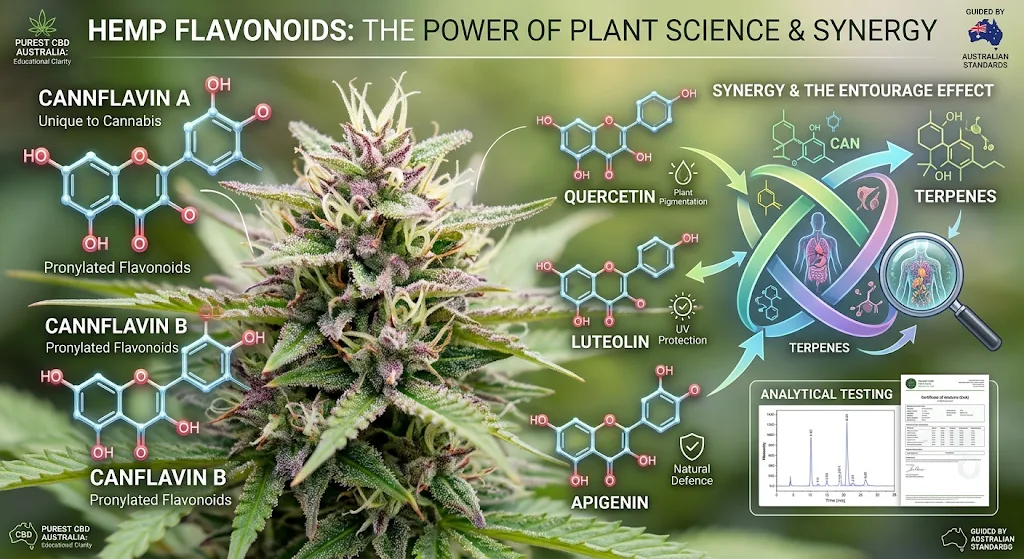
When exploring the complex botanical composition of the cannabis sativa plant, discussions frequently centre on prominent cannabinoids such as CBD and THC, alongside aromatic terpenes. However, an equally fascinating and vital group of compounds resides within the plant matrix: hemp flavonoids. These diverse phytochemicals contribute significantly to the plant’s natural characteristics, working synergistically within the broader botanical profile while offering a compelling subject for ongoing scientific research and plant science education.
Understanding the structure and role of these botanical compounds helps expand our appreciation of hemp-derived products. As regulatory frameworks and consumer interest continue to evolve in Australia—guided by standards set by bodies like the Therapeutic Goods Administration—maintaining transparency and scientific accuracy is paramount. Whether you are exploring our educational resources or browsing our comprehensive blog archives, exploring botanical science provides essential clarity.
1. What Are Hemp Flavonoids?
Flavonoids are a broad class of naturally occurring polyphenolic compounds found across the plant kingdom, responsible for the vibrant colours, aromas, and protection mechanisms in fruits, vegetables, flowers, and herbs. In the cannabis sativa plant, specialized flavonoids known as cannflavins (specifically cannflavin A, B, and C) are unique to the genus, alongside more common plant flavonoids like quercetin, luteolin, and apigenin.
These compounds act as the plant’s natural defence system against environmental stressors, UV radiation, and pests. While cannabinoids interact directly with the endocannabinoid system, hemp flavonoids function through distinct biochemical pathways, contributing to the rich phytochemical diversity of the whole plant.
2. The Role of Hemp Flavonoids in Plant Pigmentation and Protection
Beyond internal biochemistry, hemp flavonoids play a direct visual and protective role during the plant’s growth cycle. Certain flavonoids absorb specific wavelengths of ultraviolet light, shielding sensitive cellular structures from solar damage. Others impart subtle pigmentation to leaves, stems, and floral bracts.
In agricultural settings, robust flavonoid synthesis often indicates healthy plant development under optimal sunlight and soil conditions. Researchers study these natural mechanisms to understand how environmental factors influence the overall concentration of beneficial botanical constituents before harvesting and processing take place.
3. Synergy and the Entourage Effect
In modern phytochemistry, researchers investigate how multiple plant compounds interact when consumed together rather than in isolation. This concept, often referred to as the entourage effect, suggests that minor constituents like terpenes and hemp flavonoids work in concert with primary cannabinoids to enhance overall biochemical activity.
While research is ongoing, laboratory studies indicate that the presence of diverse polyphenols may modulate how botanical extracts behave. This scientific insight underpins the preference for whole-plant extraction methods that preserve the natural ratios of compounds found in the original harvested material.
4. Unique Cannflavins Specific to Cannabis
While many plants contain common flavonoids like rutin or kaempferol, cannabis plants synthesize specialized molecules called prenylated flavonoids, designated as cannflavins A and B. Discovered decades ago, these unique compounds have attracted significant attention in botanical research due to their distinct molecular structure.
Laboratory analyses show that cannflavins possess high biological activity in vitro, prompting continuous academic investigation into their specific mechanisms. Because these molecules are present in relatively small proportions compared to major cannabinoids, specialized analytical techniques are required to detect and quantify them accurately.
5. Analytical Testing and Quality Verification
Verifying the presence and concentration of hemp flavonoids requires advanced laboratory methodologies, such as high-performance liquid chromatography (HPLC). Independent third-party testing laboratories utilize these sophisticated instruments to analyze plant extracts, ensuring product consistency and label accuracy.
Transparent quality testing reassures consumers that the botanical goods they receive match strict industry specifications. Reviewing detailed Certificates of Analysis (CoAs) allows individuals to examine the full spectrum of compounds—including cannabinoids, terpenes, and flavonoids—present in any given batch.
6. Preservation During Extraction and Processing
Because flavonoids are delicate organic molecules, they can be sensitive to excessive heat, light, and prolonged exposure to oxygen. Modern extraction techniques, such as supercritical CO2 extraction, operate at controlled, lower temperatures to protect these fragile thermal-sensitive compounds.
Refining and manufacturing protocols must carefully balance purity with preservation. By optimizing extraction parameters, processors can retain a robust profile of beneficial phytochemicals, ensuring that the final extract remains as true to the raw botanical source as possible.
7. Future Directions in Australian Hemp Research
Australia’s burgeoning industrial hemp sector continues to drive innovation in cultivation, agronomy, and product formulation. As agricultural research institutions refine local hemp varieties, breeders increasingly select plants optimized for superior cannabinoid and flavonoid yields suited to Australian climatic conditions.
Educational outreach remains vital as consumer curiosity grows. By demystifying complex plant science topics, consumers can make informed, educated decisions regarding the botanical products they choose to incorporate into their daily routines.
Frequently Asked Questions About Hemp Flavonoids
What are hemp flavonoids?
Hemp flavonoids are a diverse group of naturally occurring polyphenolic compounds found in the hemp plant. They include common plant antioxidants like quercetin alongside unique cannabis-specific molecules called cannflavins, which contribute to the plant’s natural colour, protection, and phytochemical profile.
How do hemp flavonoids differ from cannabinoids?
While cannabinoids (such as CBD and THC) interact directly with mammalian endocannabinoid receptors, hemp flavonoids operate through separate biochemical pathways. They function primarily as plant antioxidants and protective pigments, though they contribute synergistically to the overall botanical matrix in whole-plant extracts.
Are flavonoids preserved in standard CBD extracts?
The preservation of flavonoids depends heavily on the extraction and refinement methods used. Gentle, advanced processing techniques—such as supercritical CO2 extraction—are specifically designed to protect delicate plant compounds, whereas harsh chemical processing or excessive heat can degrade them.
Recent Comments