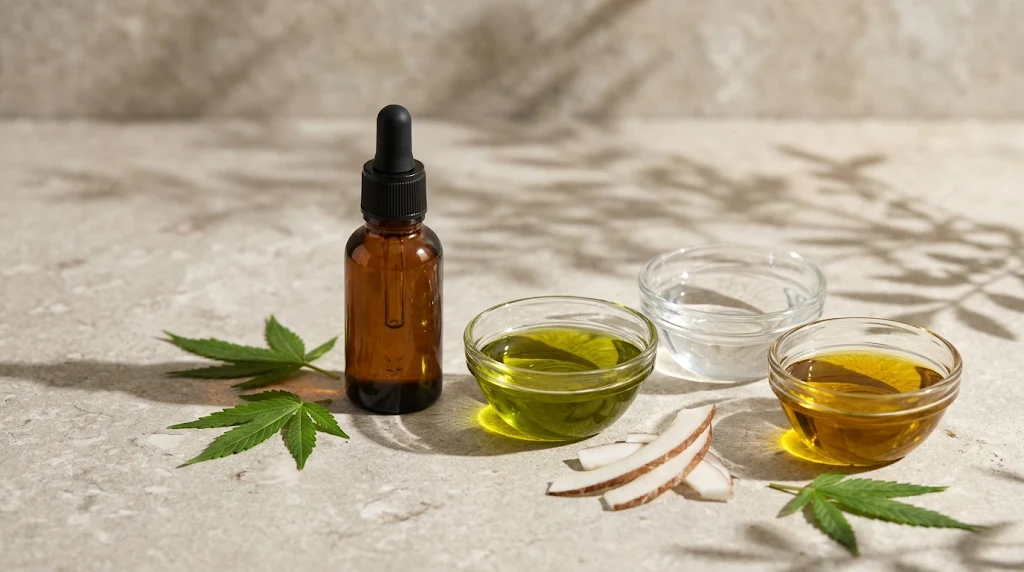
Choosing a quality cannabidiol product involves much more than checking the milligram strength printed on the front label. Understanding CBD Carrier Oils is essential for anyone evaluating how hemp extracts are formulated, stabilised, and presented for everyday use in Australia. Because pure cannabidiol extract is naturally thick, resinous, and fat-soluble, manufacturers blend it with a food-grade lipid base to create consistent liquid drops and softgels. Selecting the right base oil influences shelf stability, flavour profile, fatty acid composition, and how transparently a brand communicates its manufacturing standards.
For Australian consumers navigating prescription pathways or researching cannabinoid science, knowing how different lipid bases behave makes label reading far simpler. Rather than treating the carrier as a passive filler, informed buyers examine the botanical origin, extraction purity, and testing documentation behind every ingredient in the bottle. For broader educational resources on hemp formulations and Australian regulatory frameworks, visit the Purest CBD Australia educational blog.
Why CBD Carrier Oils Matter in Modern Hemp Formulations
Cannabinoids such as cannabidiol (CBD) are hydrophobic compounds, meaning they do not dissolve in water. Without a suitable lipid medium, concentrated hemp extract would remain a dense paste that is difficult to measure accurately drop by drop. When formulated into CBD Carrier Oils, the active hemp extract is evenly dispersed throughout a liquid triglyceride matrix, allowing manufacturers to standardise cannabinoid concentration per millilitre.
Beyond uniform suspension, the lipid base protects delicate phytocompounds from oxidation caused by light and air exposure. Different plant-derived oils contain varying ratios of saturated, monounsaturated, and polyunsaturated fats. These structural differences determine the viscosity of the final product, its natural taste, its resistance to rancidity, and how well it pairs with aromatic plant terpenes.
Comparing the Most Common Lipid Bases Used in CBD Products
Across the Australian and international hemp sectors, three primary botanical oils dominate commercial formulations. Each brings distinct physical characteristics and compositional traits that buyers should recognise when comparing product specifications.
| Carrier Oil Type | Botanical Source | Fatty Acid Profile | Flavour & Consistency |
|---|---|---|---|
| Fractionated MCT Oil | Coconut or palm kernel | Medium-chain triglycerides (C8/C10) | Neutral taste, thin, clear liquid |
| Cold-Pressed Hemp Seed Oil | Cannabis sativa seeds | Omega-3 & Omega-6 polyunsaturated fats | Earthy, nutty taste, golden-green hue |
| Extra Virgin Olive Oil | Pressed olive fruit | High monounsaturated oleic acid | Rich, fruity taste, slightly thicker body |
1. Fractionated MCT Oil (Coconut-Derived)
Medium-chain triglyceride (MCT) oil—most commonly derived from coconuts—is the industry benchmark for refined cannabinoid formulations. Through fractionation, longer-chain fats are separated to isolate caprylic acid (C8) and capric acid (C10). Because MCT oil remains liquid at room temperature, resists oxidation, and carries virtually no flavour, it allows the natural botanical notes of broad-spectrum or isolate extracts to remain clean and predictable.
2. Cold-Pressed Hemp Seed Oil
Extracted mechanically from hulled hemp seeds, cold-pressed hemp seed oil contains zero cannabinoids of its own, yet it offers a balanced ratio of omega-6 and omega-3 essential fatty acids alongside naturally occurring vitamin E. Manufacturers often choose hemp seed oil to create a whole-plant aesthetic, though its higher polyunsaturated fat content makes proper dark-glass storage and refrigeration after opening especially important.
3. Extra Virgin Olive Oil
Extra virgin olive oil provides a familiar culinary lipid profile rich in monounsaturated oleic acid and natural polyphenols. While less common in standard dropper bottles due to its heavier viscosity and distinct peppery finish, it occasionally appears in artisan formulations where mild, traditional extraction methods are prioritised.
5 Essential Tips for Evaluating CBD Carrier Oils
When reviewing product packaging, supplier specifications, or laboratory documentation, apply these five practical checks to assess the quality of CBD Carrier Oils:
- Verify the Exact Botanical Origin: Quality labels specify whether MCT oil is 100% coconut-derived rather than sourced from uncertified palm kernel plantations. Transparent sourcing reflects responsible agricultural and manufacturing practices.
- Check for Cold-Pressed or Organic Processing: For hemp seed and olive oil bases, cold-pressing preserves natural antioxidants without relying on harsh chemical solvents during seed extraction.
- Inspect Storage Packaging and Expiry Dates: Lipid bases degrade when exposed to ultraviolet light and heat. Look for UV-protective amber or violet glass bottles and clear batch expiry dates.
- Cross-Reference the Certificate of Analysis (COA): Independent third-party testing confirms that the finished blend meets its stated cannabinoid concentration and is free from residual solvents, heavy metals, and microbial contaminants.
- Review Australian Regulatory Compliance: In Australia, medicinal cannabis and cannabidiol products are regulated under strict quality and manufacturing standards overseen by the Therapeutic Goods Administration (TGA). Always verify that any product aligns with current Australian legal and quality frameworks.
How Storage and Packaging Protect Lipid Integrity
Even the highest-grade botanical carrier can deteriorate if stored improperly. Polyunsaturated oils such as hemp seed oil are particularly sensitive to heat, oxygen, and direct sunlight, which can trigger lipid peroxidation and alter both flavour and clarity over time. Storing dropper bottles upright in a cool, dark cupboard—away from kitchen stoves or sunny windowsills—helps preserve the structural stability of both the triglyceride base and the suspended hemp extract.
Frequently Asked Questions About CBD Carrier Oils
What is the most stable carrier oil used in CBD formulations?
Fractionated coconut MCT oil is widely regarded as the most shelf-stable option because its saturated medium-chain fatty acids resist oxidation far better than polyunsaturated plant oils, maintaining clarity and neutrality over extended storage periods.
Does hemp seed oil naturally contain cannabidiol?
No. Cold-pressed hemp seed oil is pressed exclusively from the seeds of the Cannabis sativa plant, which do not produce cannabinoids. Cannabidiol is extracted from the aerial flowers and leaves, then blended into the seed oil as a carrier base.
Why do Australian CBD manufacturers use dark glass bottles?
Amber and violet glass bottles filter out harmful ultraviolet wavelengths that accelerate the breakdown of both sensitive cannabinoids and delicate lipid carrier bases, helping protect product integrity until the printed expiry date.
Making Informed Choices With Purest CBD Australia
Taking time to inspect the lipid base inside any hemp formulation ensures you understand every component behind the label. By comparing fatty acid profiles, verifying clean coconut or cold-pressed sourcing, and reviewing independent batch testing, buyers can approach CBD Carrier Oils with clarity and confidence. Explore further educational articles on hemp science, formulation standards, and laboratory testing across Purest CBD Australia.
Recent Comments