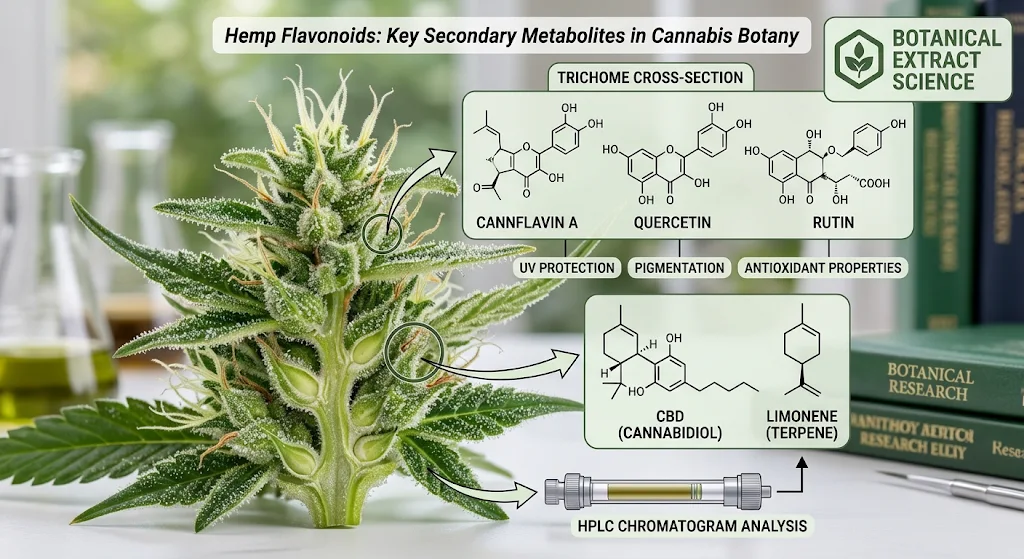
When exploring the intricate world of industrial hemp botany, discussions often centre heavily on well-known cannabinoids like CBD and aromatic terpenes. However, plant science reveals a vast array of secondary metabolites working in tandem within the cannabis plant. Among these valuable botanical constituents, hemp flavonoids play a fundamental role in defining the plant’s natural characteristics, pigmentation, and biochemical profile. For Australian consumers and researchers seeking a deeper understanding of plant science, examining these polyphenolic compounds offers valuable insight into hemp extraction and quality formulation.
What Are Hemp Flavonoids and Where Do They Come From?
Flavonoids are a diverse class of naturally occurring polyphenolic compounds widely distributed throughout the plant kingdom. In industrial hemp (Cannabis sativa), these molecules are synthesized within glandular trichomes alongside cannabinoids and terpenes. They serve essential ecological functions for the living plant, including protecting against ultraviolet radiation, attracting pollinators, and defending against environmental stressors.
While hundreds of distinct flavonoids exist across various fruits, vegetables, and botanicals, cannabis-specific research has identified unique compounds that contribute to the plant’s comprehensive phytochemical footprint. To learn more about how different botanical extracts are categorised and studied across the industry, visit the Purest CBD Australia blog.
Exploring the Role of Hemp Flavonoids in Plant Science
Beyond general polyphenols, hemp plants produce specialised molecules known as prenylated flavonoids. The most notable among these are cannflavin A and cannflavin B, which are unique to the Cannabis genus. Alongside more ubiquitous plant flavonoids such as quercetin, rutin, and luteolin, these compounds contribute to the rich biochemical complexity of whole-plant extracts.
In modern plant science, researchers examine how these secondary metabolites interact synergistically with cannabinoids and terpenes. This holistic interaction is a key area of study in botanical research, highlighting why many consumers prefer extracts that preserve the plant’s native chemical spectrum rather than isolated compounds.
Extraction Methods and Preservation of Hemp Flavonoids
Extracting delicate botanical compounds from raw hemp biomass requires precise engineering. Because polyphenols and minor plant constituents can be sensitive to excessive heat and harsh chemical solvents, advanced processing techniques—such as supercritical CO2 extraction—are frequently utilized. These methods allow laboratories to capture a comprehensive profile of cannabinoids, terpenes, and hemp flavonoids while maintaining structural integrity.
Regulatory oversight and quality standards governing industrial hemp processing are closely monitored by public health authorities. For comprehensive regulatory guidelines and public health standards within Australia, refer to official resources provided by the Therapeutic Goods Administration.
Analytical Testing and Quality Assurance
Verifying the presence and concentration of botanical compounds requires sophisticated analytical instrumentation. High-Performance Liquid Chromatography (HPLC) is the industry standard used by independent testing laboratories to analyze plant extracts. Through rigorous chromatography testing, manufacturers can generate accurate Certificates of Analysis (CoAs) that detail the exact cannabinoid, terpene, and flavonoid profiles present in a finished batch.
For Australian consumers, reviewing independent laboratory testing ensures transparency and confirms that products adhere to strict local quality benchmarks. Understanding these testing protocols empowers buyers to make informed decisions based on verifiable scientific data.
Frequently Asked Questions About Hemp Flavonoids
Are hemp flavonoids psychoactive?
No, hemp flavonoids are entirely non-psychoactive polyphenolic compounds. They do not interact with cannabinoid receptors in the same manner as THC and produce no mind-altering effects.
Do all hemp products contain flavonoids?
Full-spectrum and broad-spectrum hemp extracts typically retain a rich profile of native plant compounds, including flavonoids. In contrast, pure CBD isolates undergo extensive refinement that strips away these additional plant constituents, leaving isolated cannabidiol.
How do hemp flavonoids differ from terpenes?
While terpenes are volatile aromatic hydrocarbons responsible for the distinct scent and flavour of different hemp strains, flavonoids are larger polyphenolic molecules primarily responsible for plant coloration, UV protection, and unique biochemical properties.
As botanical research continues to evolve, understanding the multifaceted nature of hemp flavonoids provides a much clearer picture of plant science. By appreciating the synergy between cannabinoids, terpenes, and polyphenols, Australian consumers gain a thorough and educational perspective on high-quality hemp extracts.
Recent Comments