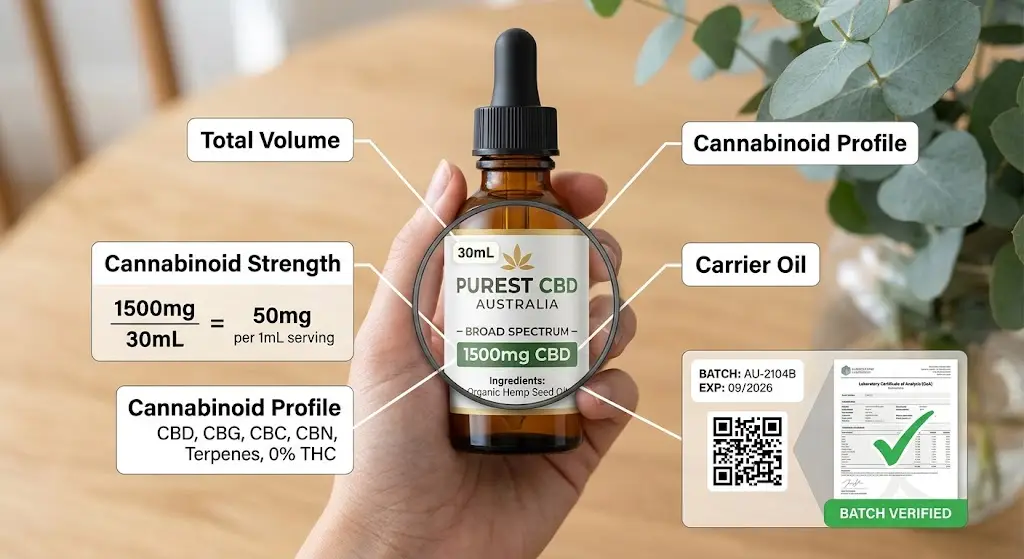
Navigating the growing market of botanical extracts requires a clear understanding of packaging metrics and terminology. Learning how to properly interpret CBD product labels empowers consumers to make well-informed, objective choices regarding product composition, purity, and formulation standards. Because labeling conventions can vary across international markets, knowing what key indicators to look for ensures you know exactly what each bottle contains.
Whether you are evaluating broad-spectrum formulas or targeted isolate products, reading product packaging carefully is the single best way to verify quality. Below are five essential steps to decoding product labels with confidence.
1. Differentiate Between Total Cannabinoids and Serving Size
One of the most common points of confusion on packaging is the distinction between total cannabinoid content and individual serving strength. A bottle marked with “1000mg” typically indicates the aggregate amount of hemp extract present in the entire bottle, not the amount delivered in a single dropper or capsule.
To determine the strength per serving, check the total volume of the liquid (usually measured in millilitres, such as 30mL) alongside the suggested serving size. Dividing the total milligram count by the total volume gives you the concentration per millilitre. For instance, a 30mL bottle containing 1500mg of extract provides 50mg per 1mL serving.
2. Identify Key Elements Found on CBD Product Labels
High-quality botanical extracts always display clear structural details on their primary packaging. When reviewing CBD product labels, ensure the following core components are clearly stated:
- Total Volume: Displayed in millilitres (mL) or fluid ounces (fl oz).
- Cannabinoid Profile: Clarification of whether the product utilizes broad-spectrum extract, full-spectrum extract, or isolated compounds.
- Carrier Oil Base: The secondary oil used to suspend the extract, such as organic hemp seed oil, medium-chain triglyceride (MCT) coconut oil, or extra virgin olive oil.
- Batch or Lot Number: A distinct tracking number linked to laboratory testing credentials.
- Storage & Expiry Details: Guidance on shelf life, optimal storage temperature, and manufacture date.
3. Review the Carrier Oil Profile
Hemp extracts are naturally lipophilic, meaning they must be dissolved in a lipid base for stability and consistent dispensing. The choice of carrier oil plays a significant role in the overall profile and taste of the product. Common carrier options include:
- Hemp Seed Oil: Rich in essential fatty acids (Omega-3 and Omega-6) with a distinctive earthy taste.
- MCT Oil: Derived from coconut oil, offering a neutral flavor profile and light consistency.
- Sunflower or Olive Oil: Smooth texture options frequently used in traditional botanical formulations.
Checking the ingredient list ensures there are no unintended additives, artificial flavorings, or potential allergens present in the formulation.
4. Verify Third-Party Testing and Batch Numbers
Reputable manufacturers prioritize transparency by linking every production batch to an independent Laboratory Certificate of Analysis (CoA). Look for a QR code or printed batch number directly on the label. Scanning this code or entering the lot number on the manufacturer’s website should provide access to testing reports verifying compound accuracy and confirming the absence of unwanted heavy metals, pesticides, or solvent residues.
In Australia, regulatory oversight by authorities such as the Therapeutic Goods Administration (TGA) emphasizes strict standards for product safety, ingredient validation, and therapeutic compliance across health frameworks.
Frequently Asked Questions About CBD Product Labels
What is the most critical information to check on product packaging?
The total concentration of cannabinoids, the volume per bottle, the complete ingredient list, and the batch number linked to third-party testing are the most critical elements to verify.
Why is cannabinoid profile labeling important?
Labeling indicates whether the extract retains broad-spectrum plant compounds (including minor terpenes and non-psychoactive cannabinoids) or consists exclusively of single-compound isolates without secondary plant lipids.
How do I confirm the shelf life of a bottle?
Look for a clear expiration date or an open-jar icon indicating the recommended usage period (e.g., “12M” for 12 months after opening). Store product bottles in a cool, dark environment away from direct sunlight to preserve freshness.
Conclusion
Understanding how to read CBD product labels accurately takes the guesswork out of evaluating botanical products. By verifying total milligram strength, inspecting carrier oils, and checking batch testing records, you can confidently select products that meet high standards of consistency and quality. For more educational resources and botanical guides, explore the latest updates on the Purest CBD Australia blog.
Recent Comments