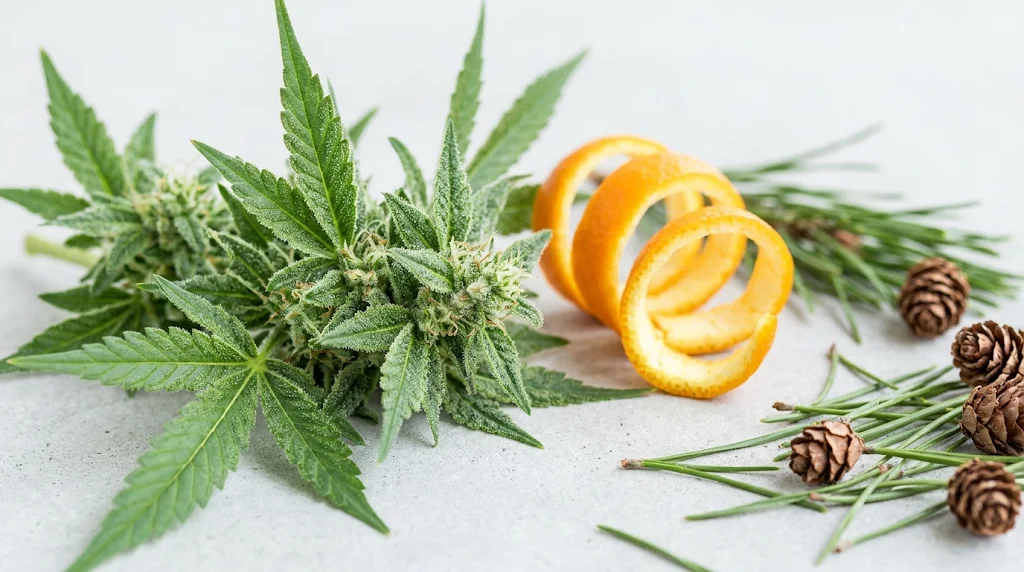
Hemp terpenes are naturally occurring aromatic compounds synthesised within the resin glands of the Cannabis sativa plant. Responsible for the distinctive scent and flavour profiles of different industrial hemp cultivars, these volatile organic hydrocarbons play vital ecological roles in plant defence and pollination. Understanding how these botanical compounds are formed, preserved, and analysed provides essential insight into hemp plant science, extraction standards, and laboratory verification across Australia.
1. Hemp Terpenes in Botanical Science Explained
In plant biology, terpenes represent one of the largest and most diverse classes of naturally occurring organic chemicals. Constructed from repeating five-carbon building blocks known as isoprene units, these molecules are produced by thousands of plant species—including pine trees, citrus fruits, lavender, and industrial hemp. Within the Purest CBD Australia educational archive, botanical science examines how these secondary metabolites contribute to the overall phytochemical fingerprint of a harvested crop.
Unlike major cannabinoids such as cannabidiol (CBD), which are non-volatile and odourless in isolated form, volatile aromatic compounds evaporate readily at room temperature. This volatility is precisely what allows the human olfactory system to detect the earthy, citrus, herbal, or woody notes characteristic of raw hemp flower and minimally processed botanical extracts.
2. How Glandular Trichomes Synthesise Hemp Terpenes
The biosynthesis of hemp terpenes takes place primarily inside specialised microscopic structures called capitate-stalked glandular trichomes. Concentrated on the bracts and unfertilised flowers of mature female hemp plants, these hair-like outgrowths act as miniature biochemical factories.
Inside the secretory cells of the trichome head, enzymatic pathways convert simple metabolic precursors into monoterpenes (composed of two isoprene units) and sesquiterpenes (composed of three isoprene units). Because monoterpenes have a lower molecular weight, they volatilise much faster during harvesting and drying, whereas heavier sesquiterpenes tend to remain more stable throughout post-harvest handling.
3. Ecological Roles in Industrial Hemp Cultivation
From an evolutionary standpoint, industrial hemp does not produce aromatic oils for human sensory appreciation; rather, these compounds serve critical survival functions in agricultural environments:
- Natural Pest Deterrence: Bitter or pungent monoterpenes discourage herbivorous insects and grazing animals from feeding on developing flowers and seeds.
- Pollinator Attraction: Specific floral and sweet-smelling volatile profiles attract beneficial insects that assist with pollination and natural pest predation.
- Environmental Stress Protection: High temperatures and intense ultraviolet radiation trigger increased resin production, forming a protective boundary layer that helps reduce moisture loss and heat stress on plant surfaces.
4. Primary Aromatic Compounds Identified in Hemp Cultivars
While researchers have catalogued more than one hundred distinct volatile compounds in Cannabis sativa, a core group typically dominates the chemical profile of licensed industrial hemp cultivars:
- Beta-Myrcene: A prevalent monoterpene recognised for its earthy, musky, and slightly clove-like aroma, commonly found in hops, lemongrass, and mangoes.
- D-Limonene: A bright, citrus-scented monoterpene abundant in orange and lemon rinds, frequently present in fresh hemp harvests.
- Beta-Caryophyllene: A heavier sesquiterpene displaying a warm, peppery, and woody scent profile also found in black pepper, cloves, and rosemary.
- Alpha-Pinene: A crisp, pine-needle aromatic compound widely distributed across coniferous trees and culinary herbs such as sage.
- Linalool: A delicate floral monoterpene notable for its lavender-like fragrance and sensitivity to elevated drying temperatures.
5. How Extraction and Processing Affect Volatile Retention
Preserving the delicate volatile profile of industrial hemp requires strict control over temperature, pressure, and airflow from harvest through to laboratory formulation. Because many monoterpenes begin evaporating at temperatures as low as 21°C to 30°C, aggressive heat during drying or distillation can strip away the native aroma profile.
Subcritical and supercritical carbon dioxide (CO2) extraction methods are widely favoured in modern botanical processing because operators can fine-tune pressure and temperature parameters to selectively capture fragile aromatic fractions without introducing harsh chemical solvents. Subsequent winterisation and gentle vacuum distillation further protect heat-sensitive compounds from thermal degradation.
6. Analytical Verification and Australian Regulatory Context
In Australia, hemp-derived extracts and cannabidiol formulations are subject to strict regulatory oversight regarding composition, purity, and labelling accuracy. Under frameworks administered by the Therapeutic Goods Administration (TGA), manufacturing quality and accurate ingredient verification remain central pillars of compliance.
To verify the exact terpene composition of a batch, accredited laboratories employ Gas Chromatography-Mass Spectrometry (GC-MS) or Headspace Gas Chromatography. Unlike High-Performance Liquid Chromatography (HPLC)—which is ideal for quantifying non-volatile cannabinoids—GC-MS gently vaporises the sample to separate and measure individual volatile hydrocarbons down to parts-per-million precision on a Certificate of Analysis (COA).
Frequently Asked Questions About Hemp Terpenes
Are hemp terpenes the same as cannabinoids like CBD?
No. While both are synthesised within the glandular trichomes of the Cannabis sativa plant, cannabinoids are non-volatile lipid-soluble compounds, whereas terpenes are volatile aromatic hydrocarbons responsible for the plant’s distinct scent and flavour characteristics.
Why do terpene profiles vary between different hemp batches?
Genetic cultivar selection, soil nutrition, local climate, harvest timing, and post-harvest drying temperatures all influence the final aromatic profile. Even genetically
Recent Comments