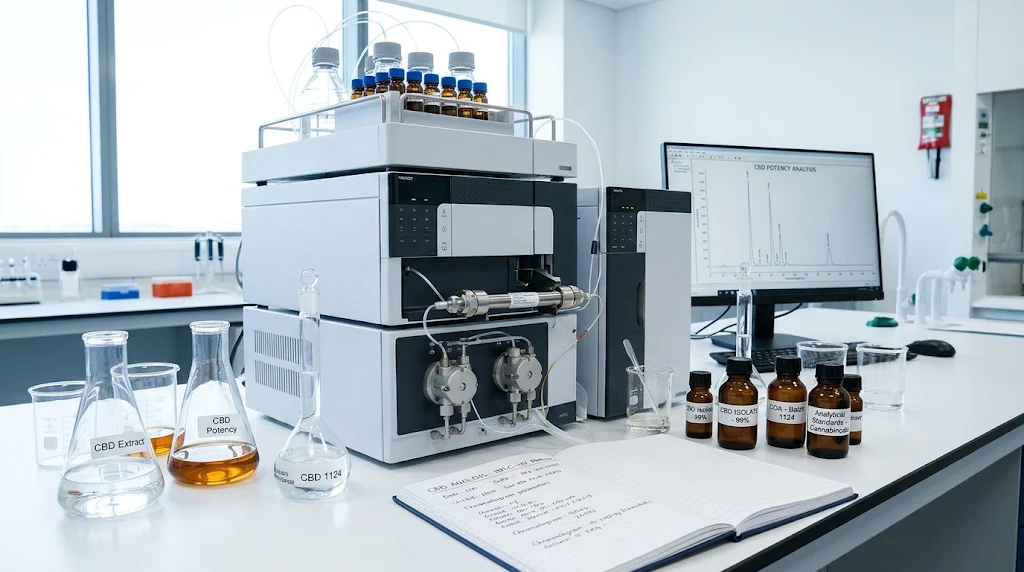
When exploring the landscape of hemp derivatives and botanical extracts in Australia, understanding the science behind product verification is essential. At Purest CBD Australia, transparency and scientific accuracy underpin everything we do. One of the most critical analytical methodologies utilised in modern laboratories to assess extract composition is HPLC Testing. This sophisticated laboratory technique allows analysts to separate, identify, and quantify individual compounds within a complex plant extract with remarkable precision.
For consumers, researchers, and industry observers navigating the evolving regulatory environment overseen by bodies such as the Therapeutic Goods Administration, comprehending how analytical testing works provides valuable clarity. Analytical validation ensures that product formulations match stated specifications without ambiguity. To learn more about broader analytical benchmarks, you can explore our comprehensive guides on the Purest CBD Australia Blog.
Understanding HPLC Testing in Modern Hemp Analysis
High-Performance Liquid Chromatography (HPLC) is a specialised analytical chemistry technique used extensively to separate, identify, and quantify components in a mixture. In the context of hemp and botanical extracts, HPLC Testing serves as the gold standard for determining cannabinoid profiles. Unlike older gas chromatography methods that require vaporization—which can potentially alter heat-sensitive compounds—liquid chromatography operates at room temperature. This distinct advantage preserves the structural integrity of delicate phytocannabinoids, ensuring that the resulting data accurately reflects the raw plant material.
The process involves passing a pressurized liquid solvent containing the sample through a column packed with a solid adsorbent material. As individual chemical constituents interact differently with the adsorbent and the solvent, they travel through the column at varying speeds, allowing precise separation. Analytical chemists can then measure each separated compound against established reference standards. This meticulous approach guarantees high repeatability and dependable accuracy across analytical batches.
Why HPLC Testing Matters for Australian CBD Quality Assurance
Quality assurance in the botanical sector relies entirely on robust, verifiable scientific data. When manufacturers formulate broad-spectrum extracts or isolate specific phytocannabinoids, verifying the exact concentration of each constituent is paramount. HPLC Testing provides the granular detail required to confirm cannabinoid potency, detect minor compounds, and verify the absence of unwanted contaminants or degradation byproducts.
In Australia, adherence to strict quality benchmarks ensures that consumers receive products that strictly conform to label claims. Analytical reports derived from advanced liquid chromatography form the foundational data for Certificates of Analysis (CoAs). These certificates offer transparent insights into product composition, allowing buyers to verify cannabinoid ratios with absolute confidence. For further reading on interpreting laboratory documentation, visit our detailed overview on interpreting laboratory results.
Furthermore, precision liquid chromatography supports continuous quality control throughout the manufacturing lifecycle. From raw biomass intake to final packaging, routine analytical checks prevent batch-to-batch variability and uphold rigorous industry standards.
The Technical Advantages of Liquid Chromatography
Evaluating the technical merits of different analytical methods highlights why liquid-based separation is preferred for complex herbal extracts. Key operational advantages include:
- Non-Destructive Thermal Profile: Operates at ambient temperatures, preventing thermal degradation of heat-sensitive botanical compounds.
- High Sensitivity and Resolution: Capable of detecting minute concentrations of target cannabinoids and related plant constituents.
- Versatility in Sample Types: Accommodates diverse matrices ranging from raw crude oils to refined distillates and finished formulations.
- Quantitative Precision: Delivers highly reproducible numerical data essential for accurate potency labeling.
These technical benefits make liquid chromatography an indispensable tool for analytical laboratories supporting the hemp industry worldwide.
Frequently Asked Questions About HPLC Testing
What is the primary purpose of HPLC testing in hemp analysis?
The primary purpose is to accurately separate, identify, and quantify individual cannabinoids and compounds within a plant extract sample, ensuring precise potency measurement and product consistency.
How does HPLC differ from gas chromatography?
While gas chromatography requires high temperatures that can alter heat-sensitive botanical compounds through vaporization, liquid chromatography operates at room temperature, preserving the natural chemical profile of the sample.
Can analytical testing detect unwanted contaminants?
Yes, advanced liquid chromatography configurations can be adapted to identify residual solvents, heavy metals, pesticides, and other potential impurities when paired with appropriate detection modules.
Recent Comments