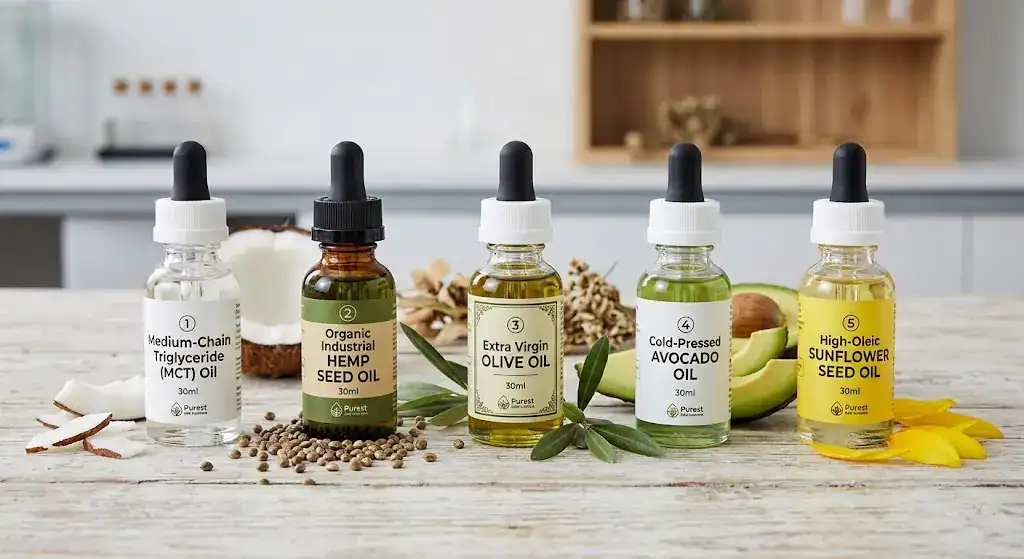
When evaluating sublingual and oral botanical formulations, CBD Carrier Oils play a fundamental role in dictating compound solubility, stability, and digestive bioavailability. Because fat-soluble hemp extracts require a lipid matrix for effective suspension and uptake, selecting the appropriate base oil is a critical step in product design. Understanding how different lipid structures interact with phytocannabinoids enables consumers and researchers across Australia to make informed evaluations of product quality and formulation integrity.
Understanding the Role of CBD Carrier Oils in Formulations
Phytocannabinoids are naturally lipophilic molecules, meaning they possess high solubility in fats and lipids while remaining practically insoluble in water. When raw botanical extracts are isolated during clean extraction processes, they must be evenly dissolved into a liquid medium to ensure consistent concentration, volumetric accuracy, and stable physical dispersion throughout the shelf life of the product.
The primary vehicle for achieving this dispersion is the lipid matrix. CBD Carrier Oils act as solubilising agents, protecting delicate phytocannabinoids from rapid degradation caused by light, heat, and ambient oxygen. Furthermore, the molecular structure of the carrier oil directly influences how the lipophilic active compounds are processed by the human digestive system. In Australia, commercial processing standards and compliance requirements overseen by regulatory bodies such as the Therapeutic Goods Administration emphasize strict adherence to quality, stability testing, and purity across liquid botanical formulations.
5 Key Botanical Options for CBD Carrier Oils
Formulators utilise a variety of plant-derived oils as carriers, each offering distinct fatty acid compositions, oxidative stabilities, viscosities, and sensory profiles. Below are five widely recognised botanical options used in high-quality preparations:
1. Medium-Chain Triglyceride (MCT) Oil
Derived primarily from coconut oil through fractionation, MCT oil consists predominantly of caprylic (C8) and capric (C10) fatty acids. Because of its saturated molecular structure, MCT oil displays exceptional oxidative stability, a near-clear visual appearance, and a neutral taste profile. Its relatively short fatty acid chains allow for rapid digestive hydrolysis and efficient micelle formation, making it one of the most popular functional carriers in modern liquid extracts.
2. Organic Industrial Hemp Seed Oil
Cold-pressed from the seeds of industrial Cannabis sativa plants, hemp seed oil provides a natural, full-spectrum botanical pairing. While seed oil contains no active cannabinoids itself, it is rich in essential polyunsaturated fatty acids, including linoleic acid (Omega-6) and alpha-linolenic acid (Omega-3) in an optimal 3:1 ratio. It imparts a deep emerald green colour and a distinctly earthy, nutty flavour profile to the final product.
3. Extra Virgin Olive Oil
A traditional favourite in botanical preparations, extra virgin olive oil is composed largely of oleic acid, a monounsaturated Omega-9 fatty acid. It naturally contains natural antioxidants, including polyphenols and tocopherols (Vitamin E), which assist in shielding active compounds from lipid peroxidation. Olive oil exhibits a smooth mouthfeel and a characteristic peppery note, though its higher viscosity requires careful batch calibration.
4. Cold-Pressed Avocado Oil
Extracted from the pulp of the avocado fruit, avocado oil is another monounsaturated-rich lipid matrix. It features high thermal and oxidative stability along with rich concentrations of phytosterols and Vitamin E. Its velvety texture and mild, buttery flavour profile make it an excellent alternative for specialty formulations where gentle taste and smooth oral viscosity are required.
5. High-Oleic Sunflower Seed Oil
High-oleic sunflower oil is derived from specific sunflower cultivars bred to yield high levels of monounsaturated oleic acid while maintaining low polyunsaturated content. This specific fatty acid composition gives the oil superior shelf stability compared to standard vegetable oils, alongside a light texture and virtually odorless character.
Comparing Lipid Structures and Bioavailability Profiles
The fatty acid composition of a lipid carrier dictates both its physical behavior during storage and its metabolic journey after oral administration. Saturated fats resist oxidation far better than polyunsaturated fats, whereas medium-chain fats bypass complex lymphatic processing and enter hepatic circulation more rapidly.
| Carrier Oil Type | Primary Fatty Acid Type | Oxidative Stability | Flavour & Colour Profile | Digestive Breakdown Speed |
|---|---|---|---|---|
| MCT Oil | Medium-Chain Saturated (C8/C10) | Very High | Neutral / Clear | Rapid |
| Hemp Seed Oil | Polyunsaturated (Omega-3 & 6) | Moderate (Requires Care) | Nutty / Emerald Green | Standard Lymphatic |
| Olive Oil | Monounsaturated (Oleic Acid) | High | Peppery / Golden Green | Standard Lymphatic |
| Avocado Oil | Monounsaturated (Oleic Acid) | High | Mild Buttery / Light Green | Standard Lymphatic |
Quality, Purity, and Storage Best Practices
Maintaining the integrity of finished botanical preparations requires proper storage and packaging protocols. Light, heat, and air exposure accelerate lipid rancidity and phytocannabinoid degradation. Premium formulations are routinely bottled in UV-protective amber or violet glass containers with tightly sealed glass droppers.
When selecting or storing botanical tinctures, consumers should ensure the product is kept in a cool, dark environment away from direct sunlight or thermal sources. Regularly reviewing batch certificates and carrier specifications provides full transparency regarding ingredient purity and shelf life integrity. To learn more about botanical extraction methodologies and testing procedures, visit the Purest CBD Australia blog.
Frequently Asked Questions About CBD Carrier Oils
Why are carrier oils required in liquid CBD formulations?
Cannabinoids are lipophilic (fat-soluble) compounds that cannot dissolve in water. Incorporating plant-based carrier oils ensures uniform active ingredient distribution, prevents settling, protects phytocannabinoids from rapid oxidation, and facilitates digestive micelle formation for consistent biological absorption.
Does the choice of carrier oil affect the product’s shelf life?
Yes. Carrier oils composed primarily of saturated fatty acids, such as MCT oil, possess higher resistance to lipid oxidation and generally offer a longer shelf life. Oils rich in polyunsaturated fatty acids, such as raw hemp seed oil, are more prone to oxidation over time and benefit from cool storage conditions.
Can different carrier oils alter the taste and appearance of liquid extracts?
Unquestionably. Fractionated MCT oil is clear and virtually tasteless, allowing the natural terpene profile of the hemp extract to remain prominent. Conversely, unrefined hemp seed oil contributes a dark green hue and nutty aroma, while extra virgin olive oil provides a characteristic golden green tone and rich, earthy flavour.
In summary, choosing appropriate CBD Carrier Oils is fundamental to ensuring formulation stability, accurate volumetric dosing, and optimal phytocannabinoid absorption. By understanding how lipid structures behave, Australian consumers and researchers can critically analyze product labeling and composition. For additional educational insights into botanical science, analytical testing, and quality standards, explore our growing resource library on the Purest CBD Australia blog.
Recent Comments