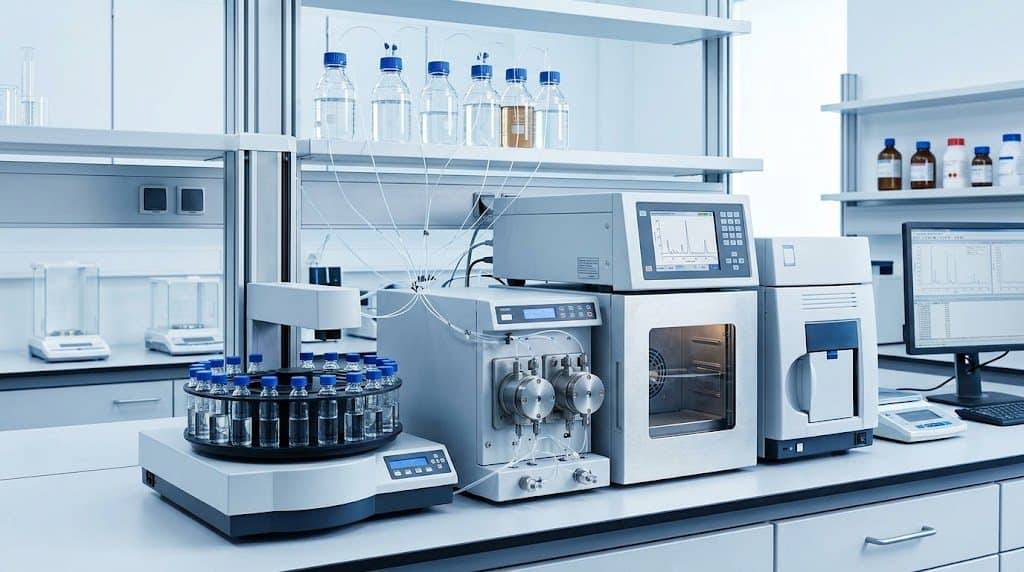
In modern analytical chemistry, precise identification of plant-derived compounds requires advanced instrumentation capable of isolating molecules without structural degradation. HPLC Cannabinoid Testing (High-Performance Liquid Chromatography) stands as the gold standard for evaluating complex botanical extracts. Unlike high-temperature analytical techniques, liquid chromatography separates active phytochemical constituents at ambient room temperature, preserving delicate molecular profiles. This rigorous testing method enables researchers, laboratories, and quality assurance personnel to measure exact cannabinoid concentrations with outstanding accuracy.
Understanding the analytical mechanics behind HPLC Cannabinoid Testing provides essential insight into how quality standards are established across the industry. By utilising high-pressure liquid mobile phases passed through specialized stationary column matrices, laboratories achieve baseline chromatographic separation across diverse cannabinoid profiles.
Why HPLC Cannabinoid Testing Is Essential for Quality Analysis
When assessing botanical extracts, selecting the appropriate analytical method is paramount. Historically, Gas Chromatography (GC) was widely utilised for chemical screening; however, GC relies on elevated thermal conditions during the injection phase. Thermal exposure induces involuntary decarboxylation, converting naturally occurring acidic cannabinoids—such as Cannabidiolic Acid (CBDA) and Tetrahydrocannabinolic Acid (THCA)—into their neutral counterparts (CBD and THC). Consequently, GC analysis fails to differentiate between pre-existing neutral cannabinoids and heat-decarboxylated acidic precursors.
By contrast, HPLC Cannabinoid Testing operates entirely under non-thermal liquid conditions. This ambient processing delivers several critical analytical benefits:
- Preservation of Native Acids: Differentiates acidic forms (CBDA, THCA, CBGA) from neutral forms (CBD, THC, CBG) without heat transformation.
- High Resolution Quantification: Achieves distinct chromatogram peaks for minor cannabinoids, including CBN, CBC, and CBDV.
- Precise Mass Absorption: Pairs seamlessly with Photodiode Array (PDA) and Ultraviolet (UV) detectors for exact light absorption quantification.
- Minimal Sample Volatilization: Eliminates compound degradation or thermal loss during sample preparation and run cycles.
Because accurate profiling demands total transparency regarding raw botanical composition, liquid chromatography remains the non-negotiable benchmark for laboratory verification.
5 Proven Steps in the HPLC Cannabinoid Testing Protocol
Achieving repeatable, peer-reviewed accuracy in chromatographic analysis requires strict adherence to standardised laboratory procedures. Below are the five fundamental steps involved in a professional HPLC Cannabinoid Testing workflow.
1. Sample Homogenisation and Solvent Extraction
The testing procedure begins with meticulous sample preparation. Raw extracts, botanical matter, or formulated oils are accurately weighed using calibrated analytical balances. The material is combined with high-purity organic solvents—typically HPLC-grade methanol or isopropanol—and subjected to ultrasonic agitation or mechanical vortexing. This process fully extracts target phytochemicals into a uniform liquid solution while dissolving unwanted waxes.
2. Sample Filtration and Column Selection
To protect sensitive instrumentation and prevent column fouling, the liquid extract is passed through a 0.22-micron polytetrafluoroethylene (PTFE) syringe filter. The micro-filtered solution is loaded into an autosampler vial. The chromatography system utilises a reversed-phase hydrophobic stationary column (commonly a C18 silica column), which retains non-polar compounds while polar compounds migrate more rapidly.
3. Gradient Mobile Phase Elution
During the analytical run, dual high-pressure pumps deliver a precise gradient of mobile phase solvents—usually a combination of acidified HPLC-grade water and acetonitrile. By systematically altering the ratio of organic solvent to aqueous solution over a set run duration (typically 10 to 20 minutes), individual cannabinoids are separated based on their unique molecular polarity and affinity for the stationary matrix.
4. Spectrophotometric Detection via UV/PDA
As separated compounds exit the chromatography column, they flow directly through a flow cell monitored by a Photodiode Array (PDA) detector set at specific UV absorbance wavelengths (predominantly 228 nm). Each distinct compound absorbs light at characteristic intensities, generating distinct retention time peaks on the resulting analytical chromatogram.
5. Data Integration and CoA Generation
Advanced chromatography software calculates the area under each absorbance peak against certified analytical reference standards. This step determines exact percentage concentrations and milligram-per-gram ratios. The final data points are compiled into a formal Certificate of Analysis (CoA), verifying compound purity and batch consistency.
Interpreting Test Certificates and Lab Verification
For research facilities and analytical technicians, interpreting a Certificate of Analysis is the definitive method for validating product integrity. In Australia, regulatory frameworks maintained by the Therapeutic Goods Administration (TGA) emphasize strict quality assurance, batch traceability, and standardised laboratory verification for botanical substances.
A comprehensive HPLC testing report outlines total potential cannabinoid values using mathematical conversion formulas that account for molecular mass differences between acidic and neutral states. To explore further educational insights on laboratory standards and botanical science, explore the Purest CBD Australia blog.
Frequently Asked Questions About HPLC Cannabinoid Testing
What makes HPLC preferable to Gas Chromatography for cannabinoid quantification?
HPLC operates at ambient temperatures, allowing acidic cannabinoids (like CBDA and THCA) to be quantified separately from neutral cannabinoids (CBD and THC). Gas chromatography requires high heat, which automatically decarboxylates acidic compounds and alters the native chemical profile during testing.
How does HPLC Cannabinoid Testing identify minor cannabinoids?
HPLC uses reverse-phase C18 stationary columns and optimized mobile phase solvent gradients to separate trace molecules by polarity. High-sensitivity UV/PDA detectors then measure individual light absorption peaks at precise retention times, allowing accurate quantification of minor constituents like CBN, CBG, and CBDV.
How frequently should botanical extracts undergo independent HPLC analysis?
Independent HPLC testing should be conducted on every individual production batch. Regular batch testing verifies raw material consistency, monitors shelf-life stability, and ensures compliance with strict quality standards.
In conclusion, HPLC Cannabinoid Testing provides the analytical precision required to guarantee consistency, verify molecular composition, and maintain complete compliance in botanical testing. By relying on rigorous non-thermal liquid chromatography, laboratories uphold the highest standards of transparency and scientific integrity across all botanical research applications.
Recent Comments