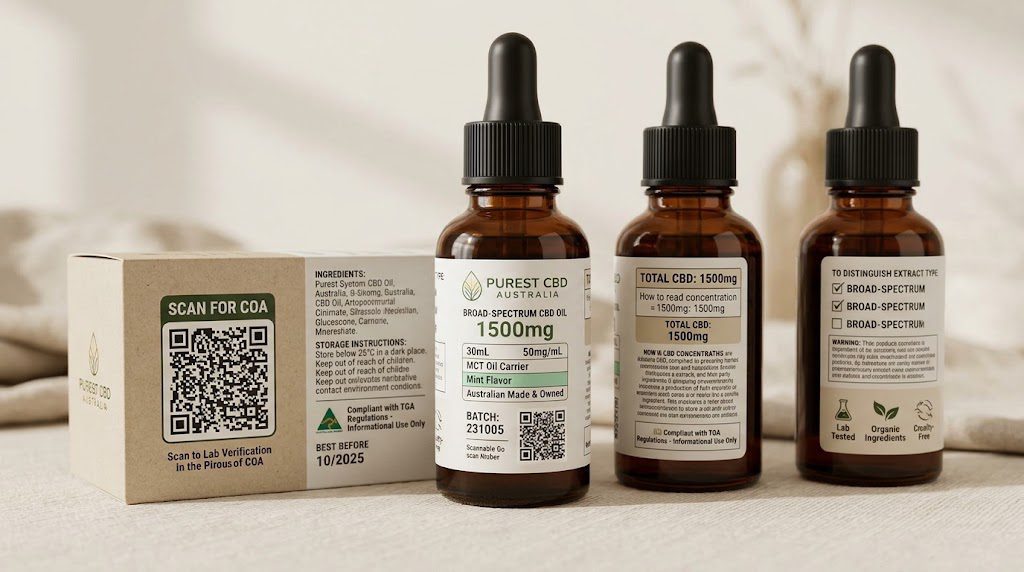
Navigating the expanding world of hemp extract products requires clear guidance, and understanding how to inspect CBD Oil Labels is the most critical skill for any Australian consumer. As market interest grows across Australia, learning to interpret packaging metrics ensures you know precisely what is contained in every bottle. From cannabinoid strength profiles to carrier oil selections and third-party laboratory verification, product packaging provides all the essential details required to make informed choices.
Whether you are comparing broad-spectrum formulations or evaluating raw botanical extracts, reading product packaging carefully protects you against misleading claims and substandard formulations. In this comprehensive guide, we unpack seven proven strategies to evaluate product labels with complete confidence, helping you navigate technical terminology and standardise your assessment process across the Purest CBD Australia blog resources.
1. Why Reading CBD Oil Labels Is Vital for Australian Consumers
In Australia, regulatory oversight surrounding hemp-derived products emphasizes consumer safety, transparency, and accurate product disclosure. Reading label specifications ensures you can verify total milligram concentration, volume metrics, and batch identification numbers prior to selection. A trustworthy manufacturer provides complete transparency on packaging, leaving no ambiguity regarding ingredient origin or production standards.
Furthermore, learning to parse label disclosures allows consumers to distinguish between authentic cannabinoid extracts and simple hemp seed oil preparations. While hemp seed oil provides valuable dietary fatty acids, it contains no active cannabinoids. Examining product labels carefully ensures that the product matches your intended educational or analytical requirements.
2. Key Components Found on Standard CBD Oil Labels
A compliant and well-structured product label displays several essential elements that indicate manufacturing excellence. When auditing packaging standards, look for the following core information blocks:
- Total Cannabinoid Content: Clearly stated in total milligrams (mg) per bottle.
- Net Volume: Displayed in millilitres (mL) or fluid ounces to calculate milligram per millilitre density.
- Full Ingredient List: Detailing primary extracts, carrier oils, and natural flavourings.
- Batch or Lot Code: A traceable tracking code linking the product directly to its independent Certificate of Analysis (COA).
- Manufacturer & Origin Details: Transparent details regarding corporate identity and processing origins.
3. Understanding Cannabinoid Concentrations on CBD Oil Labels
Calculating strength metrics from label data is straightforward once you recognise the relationship between total milligram content and liquid volume. For example, a 30 mL bottle containing 1,500 mg of total cannabinoids yields a concentration of 50 mg per millilitre (1,500 mg divided by 30 mL).
Formula for Daily Calculations: Total Milligrams of Cannabinoids ÷ Net Volume in Millilitres = Milligrams per Millilitre (mg/mL).
Understanding this ratio allows you to standardise comparison across different brand sizes and container volumes, ensuring accurate assessments regardless of bottle dimension or pipette calibration.
4. How to Spot Batch Numbers and COA Verification
High-quality hemp products always feature a distinct batch or lot number printed directly onto the glass container or secondary box. This number provides direct provenance back to independent laboratory testing protocols. Third-party testing analyses cannabinoid distribution, heavy metal screening, solvent residues, and microbiological standards.
Many modern packaging designs now incorporate a direct QR code alongside the batch details. Scanning this code takes you directly to the corresponding Certificate of Analysis. Always verify that the batch code printed on your physical bottle matches the batch number listed at the top of the lab report.
5. Checking Carrier Oils and Additional Ingredients
Active botanical compounds are lipophilic (fat-soluble) and require a liquid carrier base to facilitate consistent suspension and stability. Examining the ingredient list on product packaging reveals the specific carrier oil utilised. Common carrier bases include:
- MCT Oil (Medium-Chain Triglycerides): Derived from coconut oil, offering high stability and a neutral flavor profile.
- Hemp Seed Oil: Derived from industrial hemp seeds, providing complementary Omega-3 and Omega-6 fatty acids.
- Extra Virgin Olive Oil: A traditional organic lipid carrier valued for shelf durability.
Reviewing carrier ingredients ensures you avoid potential personal allergens or unwanted artificial additives, preservatives, or synthetic flavouring agents.
6. Identifying Storage Instructions and Expiry Dates
Environmental factors such as ultraviolet light, excessive heat, and atmospheric oxygen can degrade cannabinoid profiles over time. Standard packaging labels include clear storage directives to help maintain product integrity over its intended shelf life.
Look for directives advising storage in a cool, dark location away from direct sunlight. Additionally, check for a clear expiration date or “Best Before” stamp, which typically indicates a 12-to-24-month stability window from the date of manufacture when stored correctly.
7. Essential TGA Regulatory Context and Compliance Markers
In Australia, healthcare products and therapeutic goods are subject to oversight by the Therapeutic Goods Administration (TGA). When reviewing product packaging within the Australian regulatory landscape, non-prescription topical or educational items must maintain strict compliance without making unapproved therapeutic claims.
Legitimate products avoid claiming to treat, cure, or prevent specific medical conditions on their exterior packaging. Neutral, informative, and scientifically accurate ingredient listings are the hallmark of compliant manufacturing within Australian jurisdiction. Explore our dedicated Product Guides resource section for further detailed breakdowns on evaluating quality metrics.
Frequently Asked Questions About CBD Oil Labels
What is the difference between total mg and mg per serving on a label?
Total mg refers to the cumulative weight of active cannabinoids contained in the entire bottle, whereas mg per serving breaks down the amount delivered in a single measured pipette or drop volume.
Why is there a QR code printed on my product box?
QR codes are provided by responsible manufacturers to give instant access to third-party lab certificates (COAs) for that specific production lot, verifying compound concentration and safety screening.
Can I determine if an oil is broad-spectrum just from the packaging?
Yes, reputable brands explicitly state the extract type—such as broad-spectrum, full-spectrum, or isolate—on the main display panel and list individual constituent compounds in the ingredient panel.
By applying these seven core principles when evaluating CBD Oil Labels, Australian consumers can confidently analyze product formulations, verify third-party purity metrics, and select high-standard products tailored to their needs.
Recent Comments