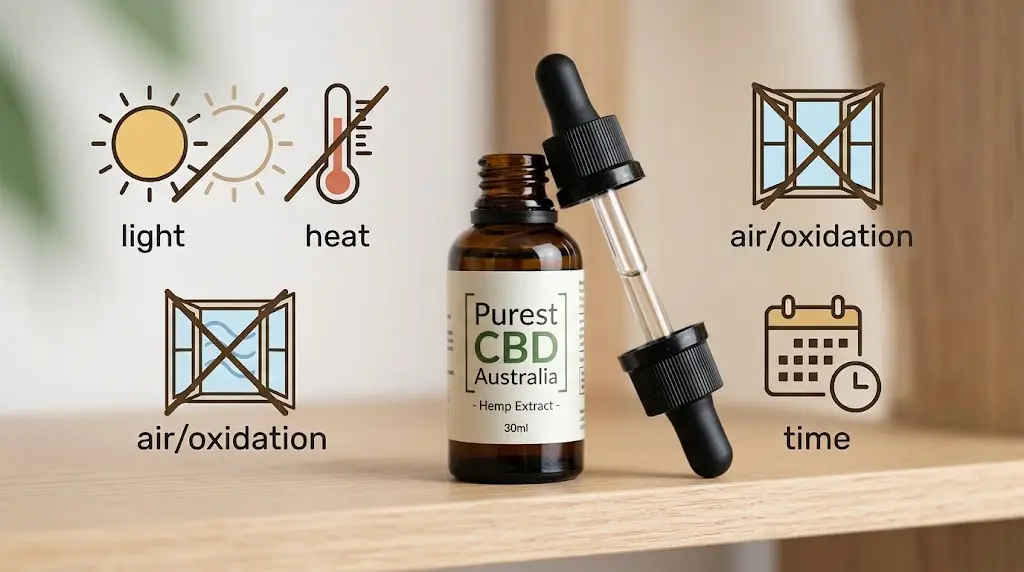
Understanding CBD shelf life is a fundamental aspect of evaluating the quality, stability, and longevity of liquid hemp extracts. Whether you are reviewing product specifications or storing full-spectrum formulations at home, natural cannabinoids and carrier oils naturally interact with their surrounding environment over time. Light, heat, oxygen, and moisture all play critical roles in determining how long a hemp product retains its baseline potency and natural aroma. In this educational guide, we examine the science behind compound degradation, carrier oil stability, and practical storage practices designed to maintain extract freshness.
Understanding CBD Shelf Life and Extract Degradation
To understand CBD shelf life, it is helpful to look at the chemistry of plant-derived extracts. Cannabinoids such as cannabidiol (CBD), cannabigerol (CBG), and cannabichromene (CBC) are organic botanical compounds produced within the trichomes of industrial hemp flowers. Once extracted through clean carbon dioxide ($\text{CO}_2$) or ethanol processes, these molecules are typically suspended in a lipid base—such as Medium-Chain Triglyceride (MCT) oil, hemp seed oil, or olive oil—to ensure uniform concentration and physical stability.
Most high-quality hemp extracts maintain an effective shelf life of 12 to 24 months under optimal storage conditions. Over extended periods, exposure to environmental triggers causes organic degradation through two primary pathways:
- Cannabinoid Oxidation: Exposure to atmospheric oxygen and light causes active cannabinoids to slowly oxidise into minor degradation products such as cannabinol (CBN) or other secondary derivatives.
- Carrier Oil Rancidity: Lipid-based carrier oils contain fatty acid chains that can undergo lipid peroxidation when exposed to heat and oxygen, leading to changes in smell, colour, and viscosity.
Primary Environmental Factors Impacting CBD Shelf Life
Several key environmental variables directly dictate CBD shelf life and extract longevity. Managing these elements is essential for maintaining product integrity from manufacture to final use.
1. Photodegradation (Light Exposure)
Ultraviolet (UV) radiation and direct sunlight accelerate chemical bond breakdown within plant extracts. High-grade products are typically housed in dark amber, cobalt blue, or violet glass bottles specifically designed to filter out harmful light frequencies.
2. Thermal Stress (Temperature)
Elevated temperatures increase molecular kinetic energy, speeding up oxidation reactions. While freezing is unnecessary and may cause oil cloudiness or wax precipitation, storing extracts in a cool environment (ideally between $15^\circ\text{C}$ and $21^\circ\text{C}$) preserves lipid structure.
3. Oxygen Contact
Every time a bottle is opened, ambient air enters the container. Leaving caps loose or unsealed introduces fresh oxygen, initiating gradual oxidation of both the cannabinoids and the lipid carrier base.
4. Moisture and Contamination
Introducing water droplets or foreign materials into the bottle via droppers creates potential micro-environments for fungal or bacterial growth, compromising overall extract purity.
5 Essential Storage Tips to Maximise CBD Shelf Life
Maintaining extract freshness requires simple, consistent storage habits. Follow these 5 practical steps to safeguard your product against premature degradation:
- Keep in a Cool, Dark Place: Store bottles inside a dark pantry, cabinet, or drawer away from direct sun and heat sources like stoves or window sills.
- Seal the Bottle Tightly: Ensure the dropper cap is fully screwed down immediately after every use to minimise atmospheric airflow into the container.
- Store Bottles Upright: Keep liquid bottles standing upright to prevent continuous contact between the extract oil and the rubber dropper bulb, which can degrade soft synthetic rubber over time.
- Avoid Direct Contact with Droppers: Prevent contamination by keeping the pipette tip clean and avoiding direct surface contact during handling.
- Verify Batch Certificates of Analysis (COA): Always check the production date and stability profiles provided in third-party laboratory testing reports. Learn more about botanical testing standards across our Purest CBD Australia blog.
For broader Australian regulatory guidelines regarding hemp products and safety frameworks, refer to official updates from the Therapeutic Goods Administration (TGA).
Frequently Asked Questions About CBD Shelf Life
- How long does an unopened bottle of CBD oil typically last?
Unopened bottles sealed in dark glass generally retain full stability for 12 to 24 months when stored in a cool, dark environment. - Can you extend CBD shelf life by keeping it in the refrigerator?
Refrigeration can help preserve oil stability in warm climates, though it may temporarily thicken carrier oils like MCT or hempseed oil. Allowing the bottle to return to room temperature before use restores normal fluidity. - What are the signs that a CBD oil has degraded?
Key indicators of degraded oil include a dark, cloudy appearance, a noticeable sour or rancid smell, a heavy change in taste, or separation of ingredients that cannot be recombined by gentle shaking.
Summary & Storage Best Practices
Understanding CBD shelf life ensures that plant extracts remain clean, stable, and effective throughout their intended lifespan. By protecting extracts from light, heat, and air, consumers and stockists can preserve baseline cannabinoid profiles and prevent carrier oil breakdown. For further insights into laboratory testing, Certificates of Analysis, and botanical extract quality, visit Purest CBD Australia.
Recent Comments