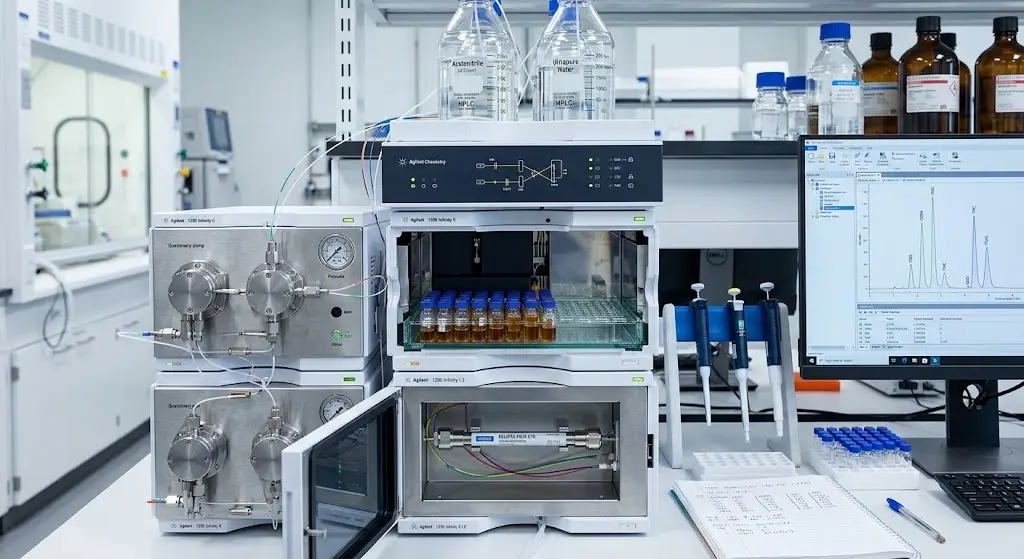
Modern analytical chemistry plays a fundamental role in evaluating botanical extract composition, ensuring consistent quality and standardisation across commercial processing batches. Among various laboratory analytical methods, HPLC Cannabinoid Testing (High-Performance Liquid Chromatography) stands as the gold standard for separating, identifying, and quantifying active plant compounds. By operating at ambient or controlled room temperatures without thermal degradation, liquid chromatography provides precise measurement of both neutral and acidic precursor molecules. Understanding how certified laboratories conduct HPLC Cannabinoid Testing allows distributors, researchers, and consumers to interpret analytical data with confidence. In this comprehensive technical guide, we explore the core operational principles of high-performance liquid chromatography and outline five critical standards that guarantee reliable, reproducible analytical purity outcomes.
What Is HPLC Cannabinoid Testing in Laboratory Analysis?
High-Performance Liquid Chromatography is an advanced analytical separation technique used to evaluate complex chemical mixtures in liquid solutions. In botanical extract analysis, raw sample material is precisely weighed, dissolved in an organic solvent mobile phase, and pumped under high pressure through a specialized stationary phase column. As individual compounds interact with the chemical coating of the column packing material, they travel at distinct migration rates, resulting in clean baseline separation based on molecular polarity and chemical affinity.
Unlike Gas Chromatography (GC), which relies on elevated thermal conditions and frequently triggers thermal decarboxylation (spontaneously converting cannabinoid acids like CBDA or THCA into neutral forms like CBD or THC), HPLC Cannabinoid Testing analyses target molecules in their native, unheated state. This non-destructive separation mechanism delivers an accurate breakdown of both acidic precursors and neutral target compounds without altering sample chemistry during testing. Consequently, analytical testing facilities can report complete quantitative profiles across all plant constituents.
In Australia, regulatory authorities such as the Therapeutic Goods Administration (TGA) emphasize rigorous laboratory oversight, validated analytical methodologies, and strict standardisation across agricultural and botanical testing workflows.
5 Critical Standards for HPLC Cannabinoid Testing Purity
To achieve high reproducibility, linear detector response, and accurate quantification in botanical extract analysis, accredited testing laboratories adhere to standardized analytical benchmarks. Below are the five foundational quality standards required during HPLC Cannabinoid Testing:
- System Suitability and Calibration Standardisation: Before evaluating sample batches, liquid chromatography systems undergo rigorous system suitability checks using Certified Reference Materials (CRMs). System testing verifies column theoretical plate count, peak symmetry, and retention time precision. Multi-point calibration curves confirm linear detection response across varying concentration ranges.
- Optimised Mobile Phase and Gradient Elution Control: Achieving complete baseline resolution requires careful selection of mobile phase solvent mixtures, typically combining high-purity acetonitrile, ultrapure water, and organic acid modifiers. Gradient elution techniques—dynamically adjusting solvent ratios during run execution—allow polar and non-polar compounds to resolve cleanly without peak tailing.
- Photodiode Array (PDA/UV) Detection Sensitivity: Multi-wavelength Photodiode Array detectors monitor UV absorption spectra across specific wavelengths (typically 220 nm to 230 nm). This spectral data allows lab technicians to verify analyte identity by cross-referencing absorption profiles against reference spectral libraries, preventing co-eluting plant compounds from altering results.
- Meticulous Sample Preparation and Matrix Filtration: Complex botanical matrices contain waxes, lipids, and chlorophyll that can foul analytical columns if uncorrected. Standardized homogenisation, volumetric dilution, and sub-micron PTFE syringe filtration remove particulate matter while maintaining accurate target molecule concentrations.
- Inter-Laboratory Quality Control and Proficiency Audits: Accredited analytical facilities participate in regular proficiency testing programs and internal quality audits. Running matrix spikes, method blanks, and replicate sample evaluations ensures instrument stability and consistent batch-to-batch reporting over extended timeframes.
For additional educational resources regarding botanical research, extraction science, and quality assurance workflows, explore our full library of articles in the Purest CBD Australia Blog.
Why Accuracy in HPLC Cannabinoid Testing Matters
Precision in chromatographic measurement underpins stability, standardisation, and consistency throughout agricultural processing and final product formulation. When laboratory reports deliver verifiable quantitative data, formulation specialists and quality assurance personnel can confirm raw material provenance, evaluate extraction efficiency, and monitor chemical degradation over time. Furthermore, standardized HPLC Cannabinoid Testing removes ambiguity surrounding acidic precursor conversion, establishing transparent, verifiable metrics for quality control assessment.
Frequently Asked Questions About HPLC Cannabinoid Testing
What is the primary advantage of HPLC over Gas Chromatography for cannabinoids?
The principal advantage of HPLC is its ability to operate at controlled room temperatures without heat application. This preserves heat-sensitive cannabinoid acids (such as CBDA and THCA), allowing laboratories to measure both acidic precursors and neutral compounds independently without causing thermal decarboxylation during sample analysis.
Which target compounds are routinely quantified during HPLC runs?
Standardized HPLC methodologies routinely separate and quantify major and minor phytocannabinoids, including CBD, CBDA, CBG, CBGA, CBN, CBC, and delta-9 THC variants, delivering a comprehensive chromatographic spectrum from a single analytical injection.
How do laboratories verify detector accuracy and linearity?
Testing laboratories maintain detector accuracy by generating multi-point calibration curves using Certified Reference Materials (CRMs), running daily system suitability checks, verifying peak resolution parameters, and participating in ISO/IEC 17025 accredited proficiency testing programs.
By establishing rigorous laboratory controls and standardized chromatographic protocols, modern HPLC Cannabinoid Testing provides the analytical precision necessary for transparent botanical verification and scientific research.
Recent Comments