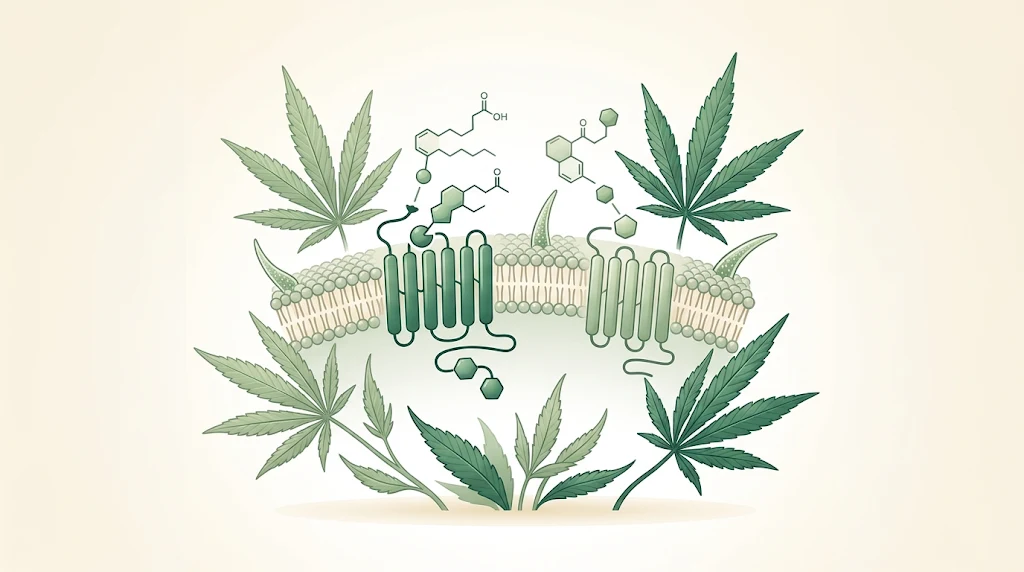
The Endocannabinoid System is one of the most widely studied biological signalling networks in modern human physiology. Discovered by researchers in the early 1990s while investigating how plant-derived compounds interact with mammalian cells, this intricate network plays a central role in maintaining internal cellular balance, known scientifically as homeostasis.
Whether you are researching hemp botany or exploring how cannabinoids are studied in Australia, understanding the structure and function of the Endocannabinoid System provides an essential scientific foundation.

Unlike isolated hormone pathways that govern a single organ, this network operates across the brain, central nervous system, peripheral tissues, and immune cells. In Australia, educational resources surrounding hemp constituents must align strictly with standards set by the Therapeutic Goods Administration (TGA). Below, we examine five scientifically established facts about how this biological network functions.
1. The Three Core Components of the Endocannabinoid System
To understand how cellular communication occurs within this network, researchers divide its architecture into three primary biological pillars. Each component performs a distinct mechanical role to ensure chemical messages are sent, received, and deactivated with precision:
- Endocannabinoids: These are endogenous lipid-based neurotransmitters synthesised naturally by the human body on demand. The two most extensively characterised endocannabinoids are anandamide (AEA) and 2-arachidonoylglycerol (2-AG), produced directly from cell membrane phospholipids precisely when required.
- Cannabinoid Receptors: Located on the outer surface of cells throughout the body, these G-protein-coupled receptors act as molecular locks. When an endocannabinoid binds to a receptor, it triggers an intracellular biochemical cascade that adjusts cellular activity.
- Metabolic Enzymes: Once endocannabinoids have delivered their signal, specialised enzymes rapidly break them down so signalling does not continue indefinitely. Fatty acid amide hydrolase (FAAH) primarily degrades anandamide, whereas monoacylglycerol lipase (MAGL) breaks down 2-AG.
2. How CB1 and CB2 Receptors Distribute Across the Body
Scientific literature identifies two primary receptor subtypes within the Endocannabinoid System: Cannabinoid Receptor Type 1 (CB1) and Cannabinoid Receptor Type 2 (CB2). While both belong to the G-protein-coupled receptor superfamily, their anatomical distribution differs substantially:
- CB1 Receptors: Found predominantly throughout the central nervous system, including regions of the brain associated with memory processing, motor coordination, sensory perception, and autonomic regulation. Lower densities also appear in peripheral organs and the gastrointestinal tract.
- CB2 Receptors: Expressed primarily on peripheral immune cells, such as macrophages, B-cells, and natural killer cells, as well as within the spleen, tonsils, and peripheral nervous system structures.
Because CB1 and CB2 receptors are distributed across distinct physiological tissues, researchers study them separately to map how endogenous lipids regulate localised cellular communication without disrupting unrelated organ systems.
3. Retrograde Signalling Sets This Network Apart
One of the most remarkable scientific discoveries regarding the Endocannabinoid System is its direction of communication. In conventional synaptic transmission, a presynaptic neuron releases neurotransmitters across a microscopic gap (the synapse) to stimulate a postsynaptic neuron.
Endocannabinoids operate in reverse through a mechanism called retrograde signalling. When a postsynaptic neuron is heavily stimulated, it synthesises anandamide or 2-AG on demand and releases them backwards across the synapse to bind with CB1 receptors on the presynaptic neuron.
This feedback loop acts as a natural biological dimmer switch, instructing the presynaptic neuron to temporarily moderate further neurotransmitter release and maintain steady equilibrium.
4. Plant Cannabinoids Interact Differently With Receptors
Phytocannabinoids—such as cannabidiol (CBD) and tetrahydrocannabinol (THC)—are naturally occurring compounds synthesised within the glandular trichomes of Cannabis sativa and low-THC industrial hemp cultivars. Although structurally related to mammalian endocannabinoids, different phytocannabinoids interact with human receptors in distinct ways.
Scientific studies demonstrate that CBD exhibits very low direct binding affinity for the primary orthosteric sites of both CB1 and CB2 receptors. Instead, laboratory research indicates that CBD acts as a negative allosteric modulator at CB1 receptors and interacts with non-cannabinoid targets, including serotonin (5-HT1A) receptors, TRPV1 ion channels, and FAAH enzymes.
To explore more foundational topics in hemp science and regulatory literacy, visit the Purest CBD Australia educational blog.
5. Evolutionary Conservation Across Vertebrate Species
Comparative biology reveals that the Endocannabinoid System is not unique to humans. Genetic sequencing and receptor mapping confirm that functional cannabinoid receptors and endocannabinoid-synthesising enzymes are conserved across virtually all vertebrate species, including mammals, birds, reptiles, amphibians, and fish.
Researchers estimate that the ancestral molecular components of this signalling network evolved over 500 million years ago. Its preservation across hundreds of millions of years of vertebrate evolution underscores its fundamental biological utility in supporting cellular adaptation and physiological stability.
Frequently Asked Questions About Endocannabinoid System
When was the Endocannabinoid System first discovered?
Researchers first identified cannabinoid receptors in mammalian brain tissue in 1988, followed by the isolation of the first endogenous cannabinoid, anandamide, in 1992. Subsequent research throughout the 1990s mapped the CB2 receptor, 2-AG, and the metabolic enzymes FAAH and MAGL.
Does the human body produce cannabinoids without hemp or cannabis?
Yes. The human body naturally synthesises its own endogenous cannabinoids—primarily anandamide and 2-AG—from dietary fatty acids within cell membranes. These molecules are produced internally every day regardless of exposure to botanical hemp compounds.
Why do Australian educational articles avoid therapeutic claims about CBD?
Under Australian federal regulations administered by the Therapeutic Goods Administration (TGA), unapproved therapeutic goods cannot be advertised or promoted with claims that they treat, cure, or prevent medical conditions. Objective educational resources therefore focus strictly on verified biochemistry, plant science, and quality testing standards.
Gaining a clear, evidence-based understanding of the Endocannabinoid System empowers readers to distinguish established biochemical facts from common misconceptions. By focusing on peer-reviewed physiology and Australian compliance standards, we can better appreciate how endogenous lipids, receptors, and enzymes work together to sustain internal cellular balance.
Recent Comments